From the project to the first backbone (1989-1991)
The project for the creation of the national research network was presented to the Ministry in 1989; once approved, it received a grant of 5 billion lire from the chapter on research infrastructure of the 1988 National Budget Law. The total cost of the project was more than 8 billion, and the remaining 3 were invested by the six member organisations, who signed an agreement on March 2 1989, providing for a three-year term and the establishment of a Network Management Committee chaired by Antonio Cantore, director of CILEA.
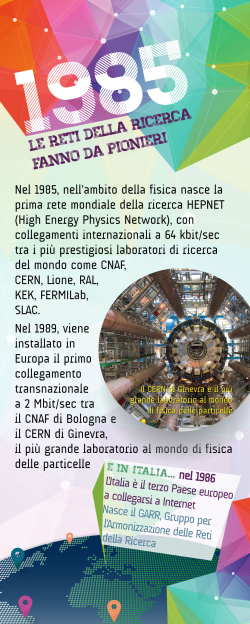
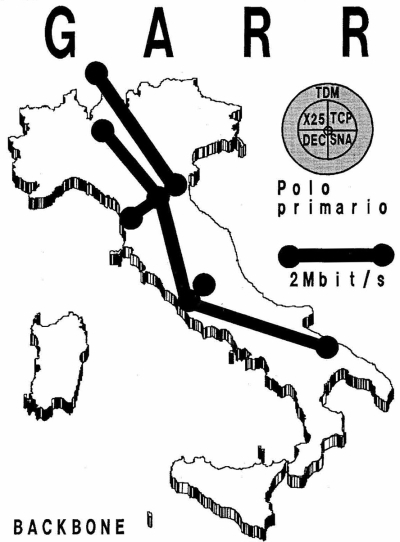
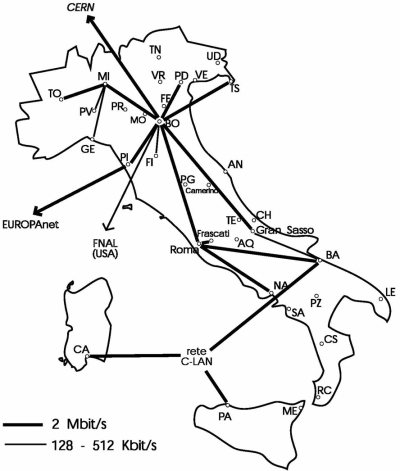
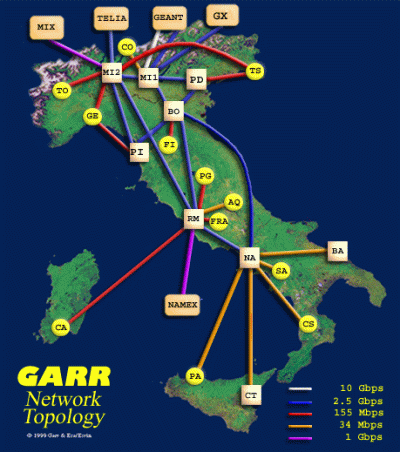
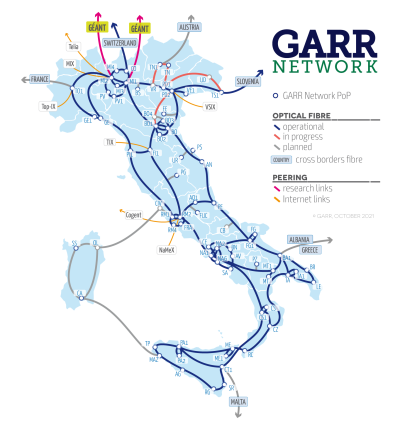
The first phase of the project called for the establishment of the network backbone that interconnected 7 main nodes: Milan (CILEA), Bologna (CINECA and the ENEA and INFN-CNAF pole), Pisa (CNR-CNUCE), Rome (INFN), Frascati ENEA and INFN) and Bari (CSATA). The speed of the connections between these sites was very high for the time at 2 Mbps. Subsequently, hundreds of other research institutes and universities were linked with variable speeds from 64 kbps to 2 Mbps. The network also had links with international research networks and with CERN in Geneva.
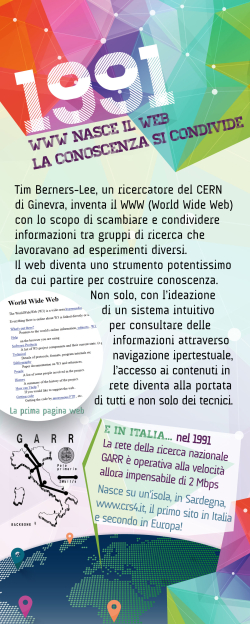
The project was completed very fast, so that in early November 1990 the first tests were carried out and the network became fully operational in 1991.
Nevertheless, the work was not easy because, with different protocols, each network was speaking its own language, with each research group considering their own choice was the best. The approach used by GARR network was not to impose a protocol on others but rather to allow them to co-exist. It was the natural evolution of the network to determine the success of the TCP/IP protocol that is still in use today.
The network was recognised internationally as one of the most advanced in terms of design and performance and was created to adapt easily to future developments.
Up to 5000 times faster (1992-2011)
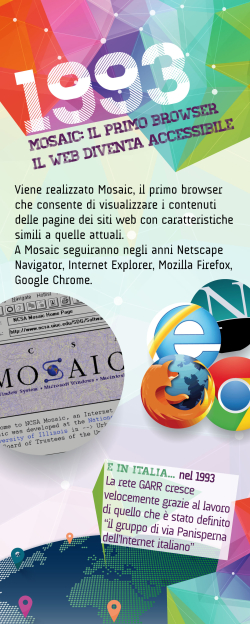
From the beginning, there were specific working groups within GARR for the various network aspects: one for the network infrastructure, one for e-mail and one for each of the different network protocols. These groups included the most important experts in the field, those who a network historian such as Giorgio Giunchi called "the via Panisperna Group of the Italian Internet".
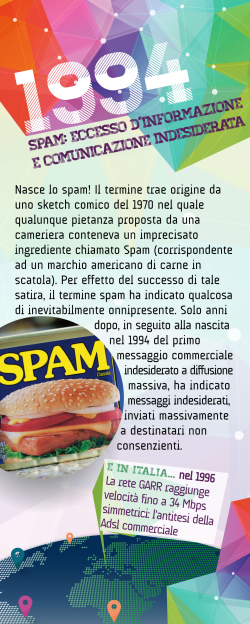
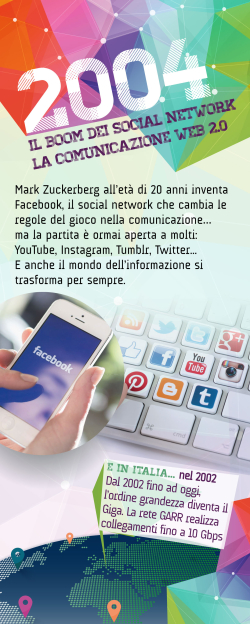
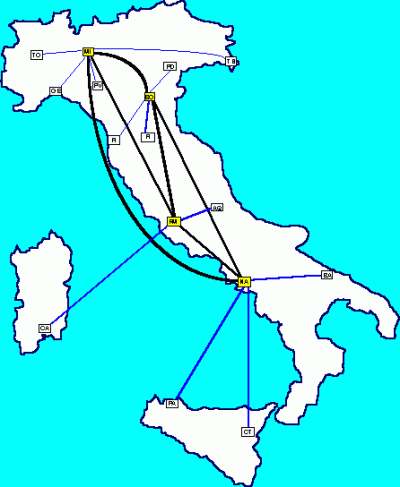
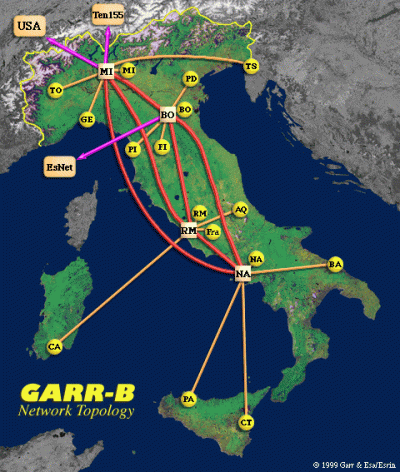
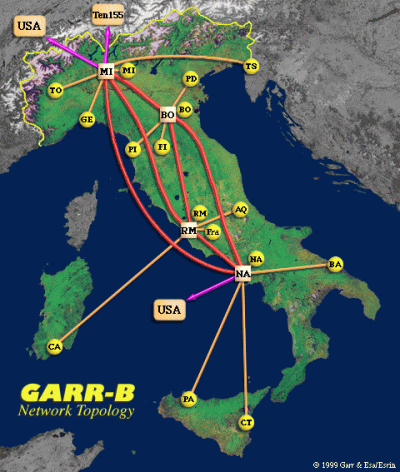
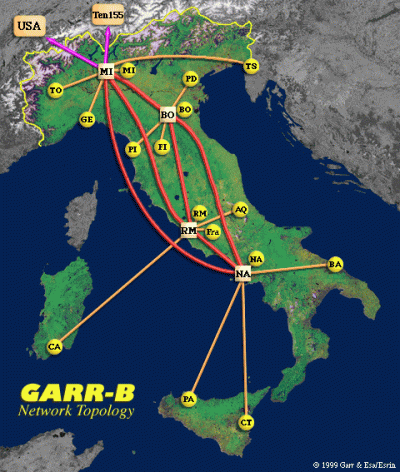
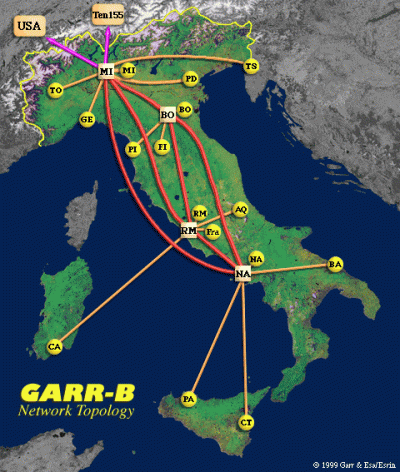
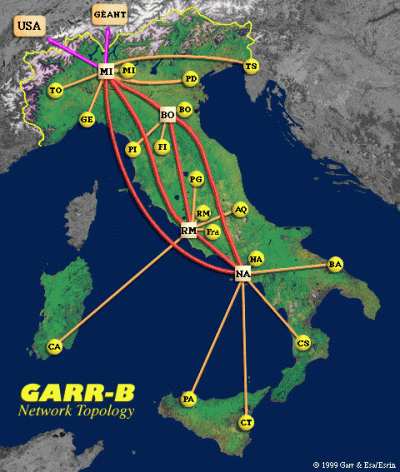
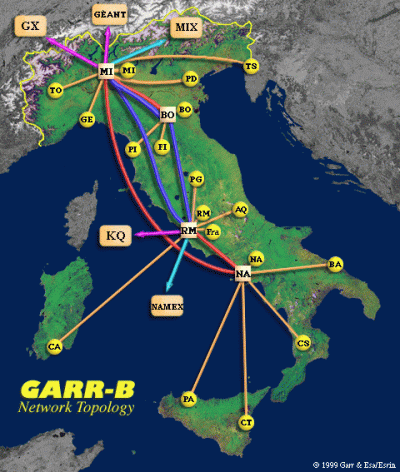
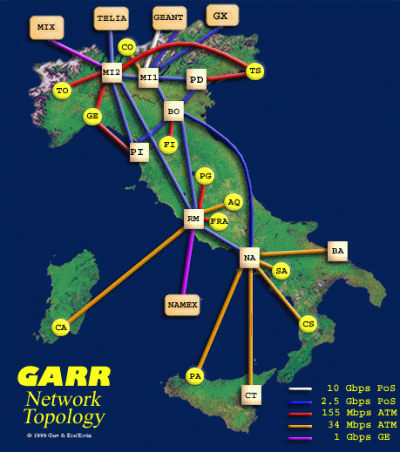
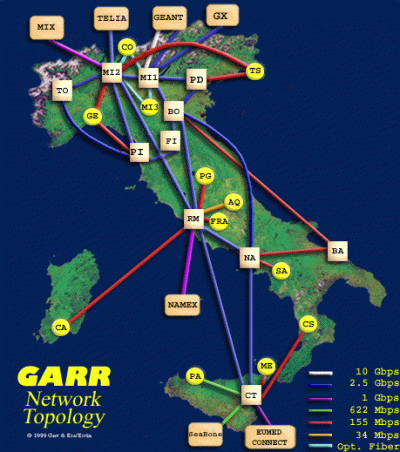
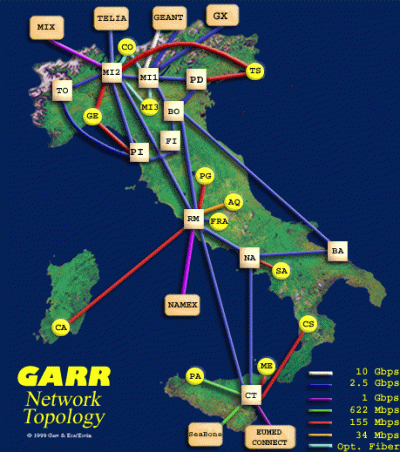
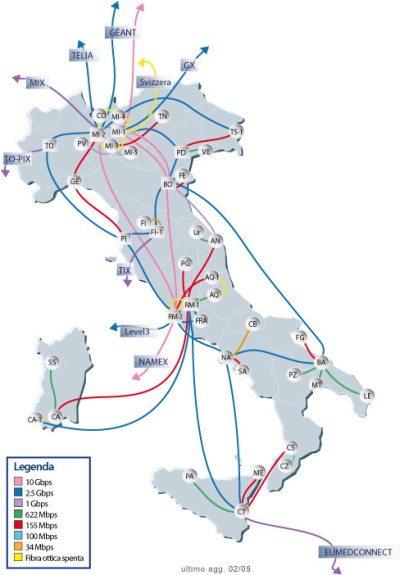
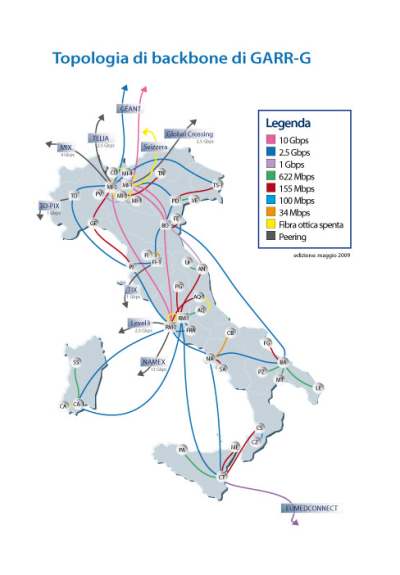
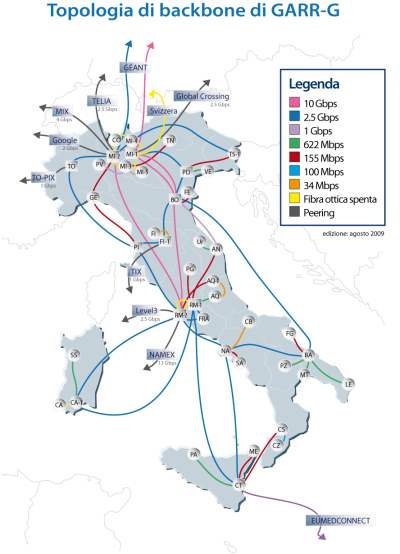
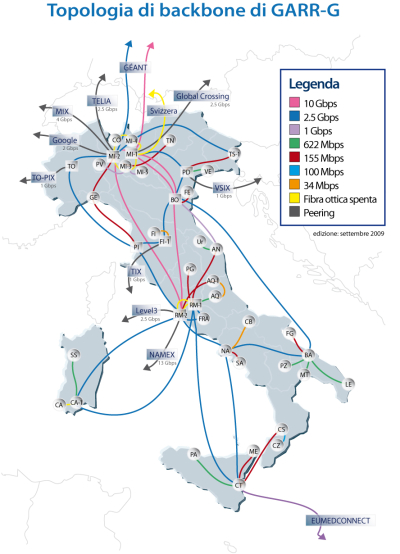
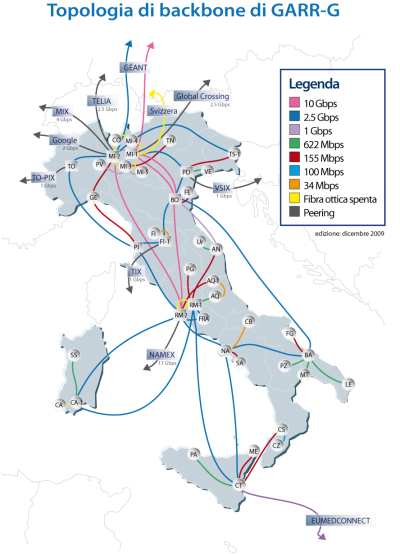
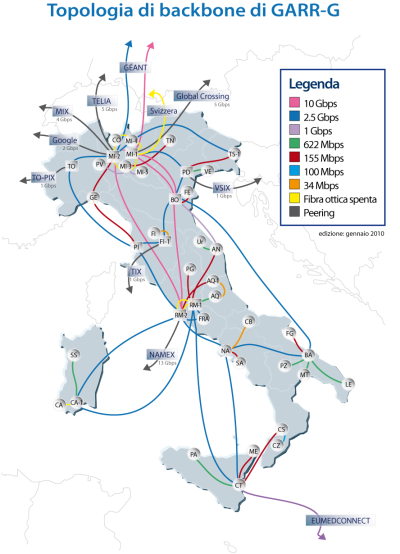
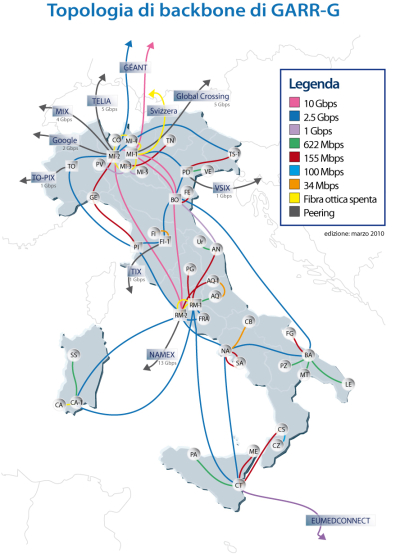
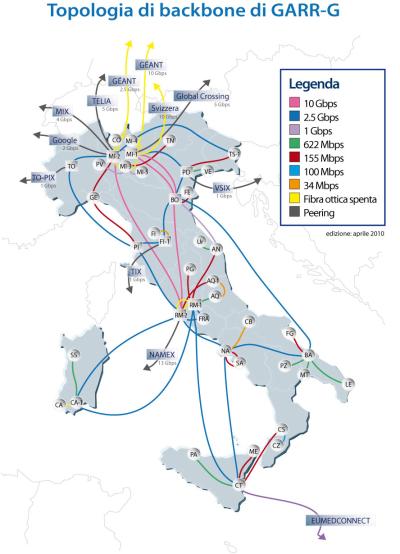
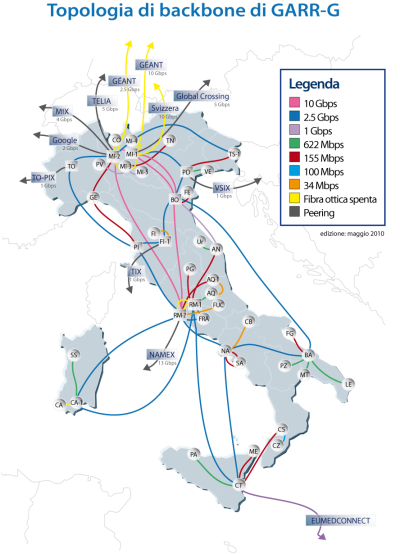
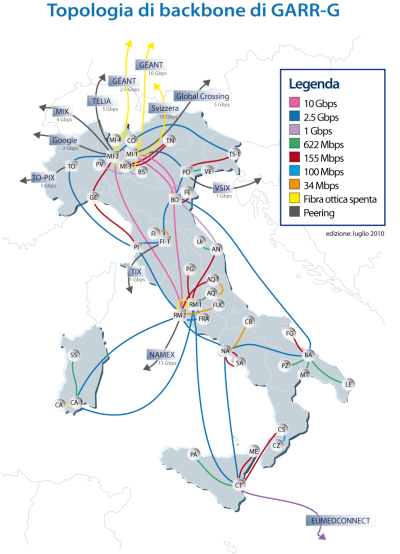
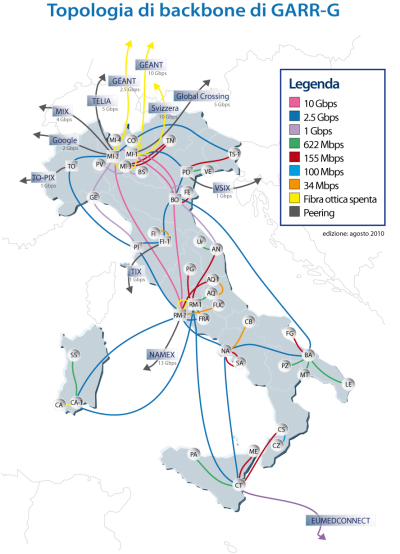
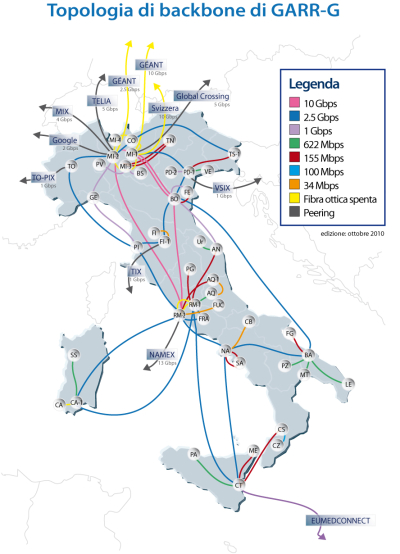
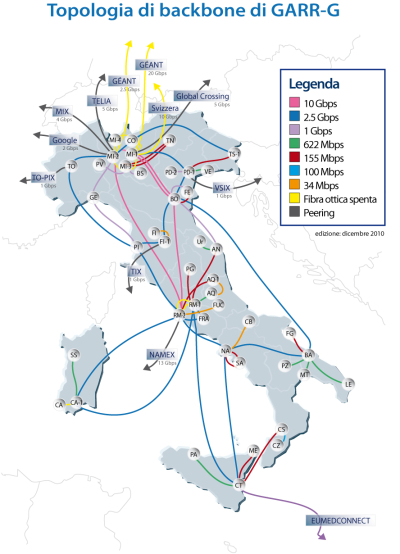
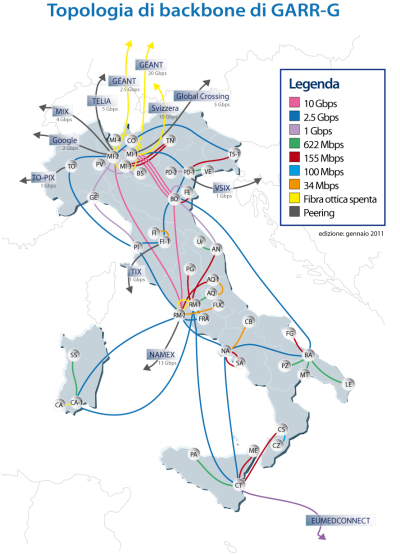
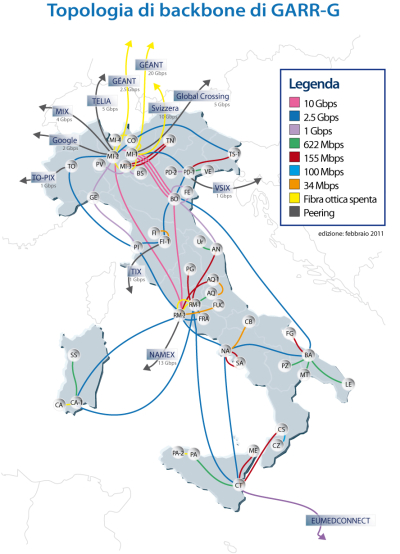
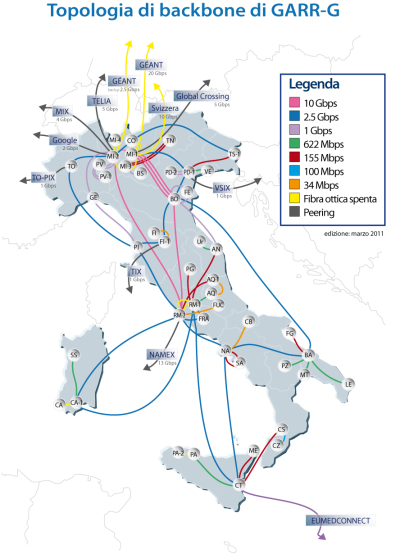
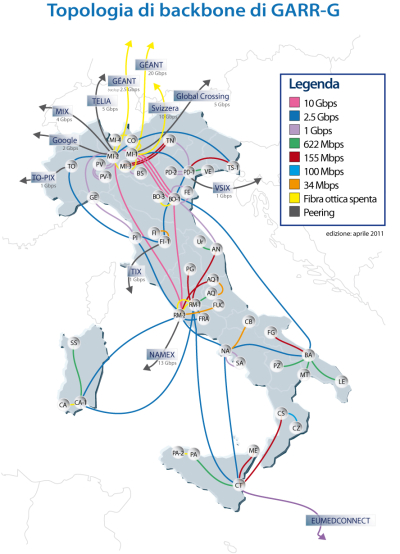
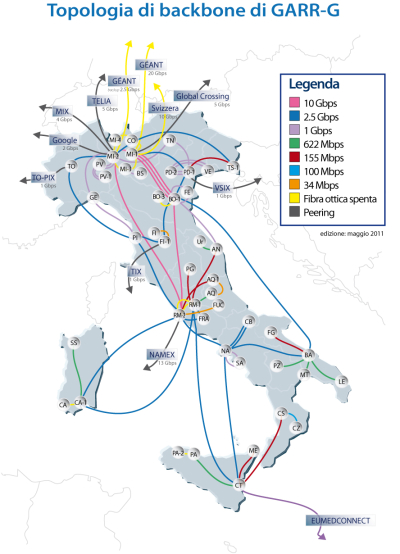
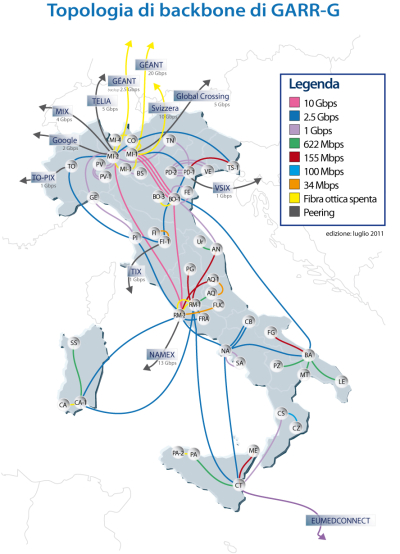
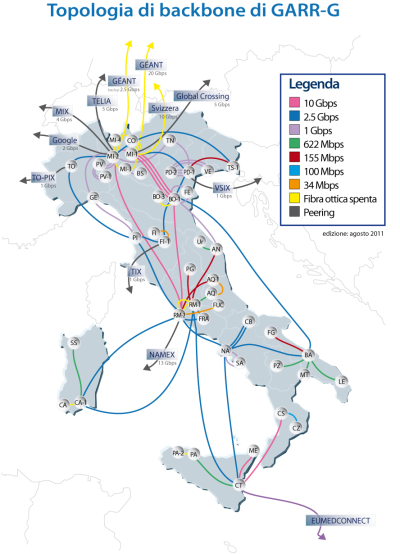
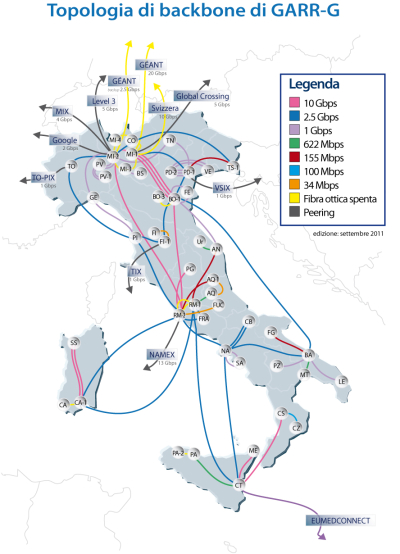
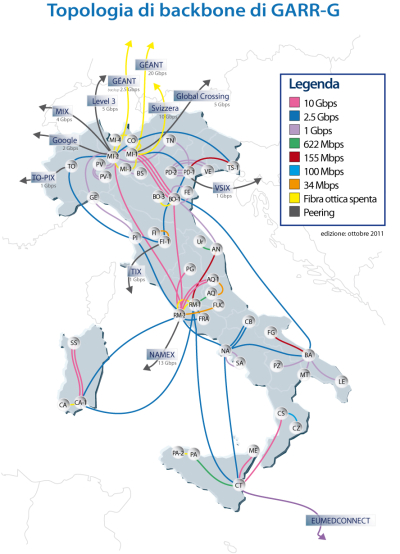
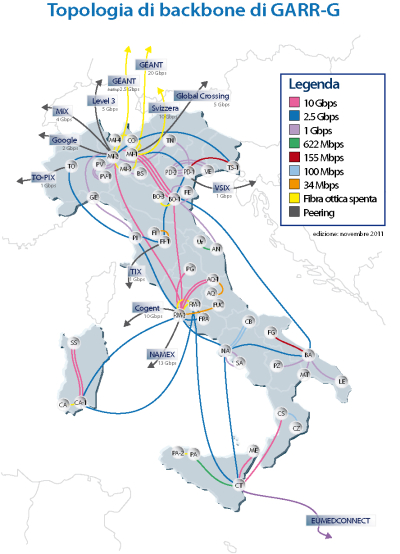
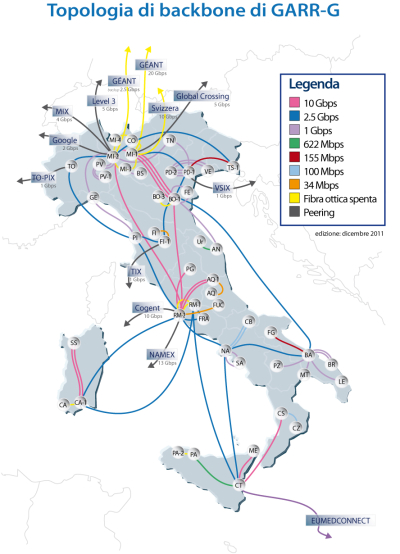
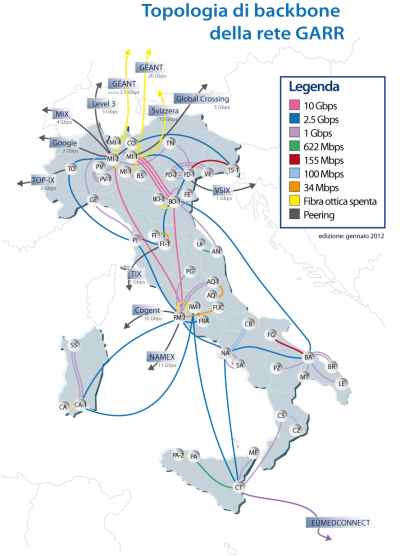
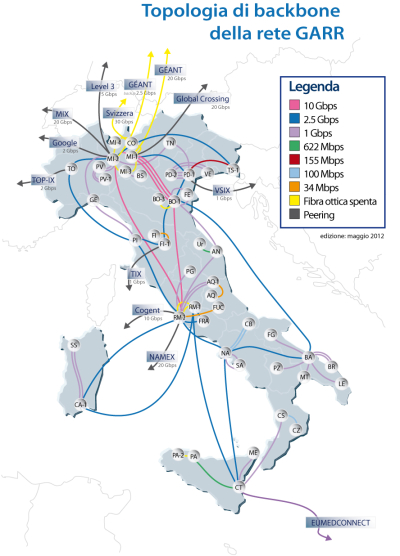
GARR network grew rapidly, and subsequent years saw technological developments that led to ever higher speeds. GARR-2 became active in 1994, reaching speeds up to 34 Mbps by 1996, while 1998 saw the birth of GARR-B (Broadband), which once completed would reach 155 Mbps. In the 90s, the design and management of the network were a cooperative effort involving all institutions; among these, INFN-CNAF was particularly active. In more recent years, starting in 2002, the order of magnitude was the Gig. In fact the GARR-G (Giganet) network includes connections up to 10 Gbps.
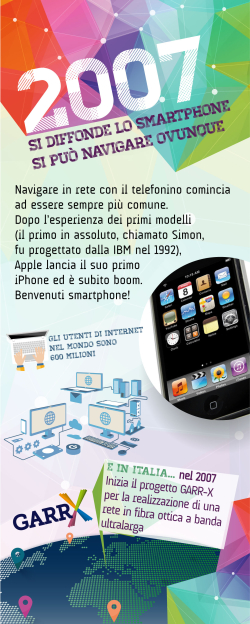
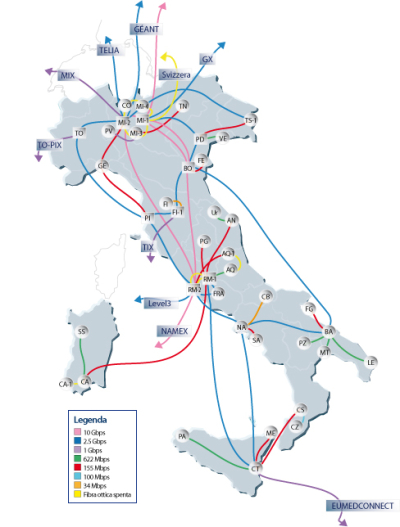
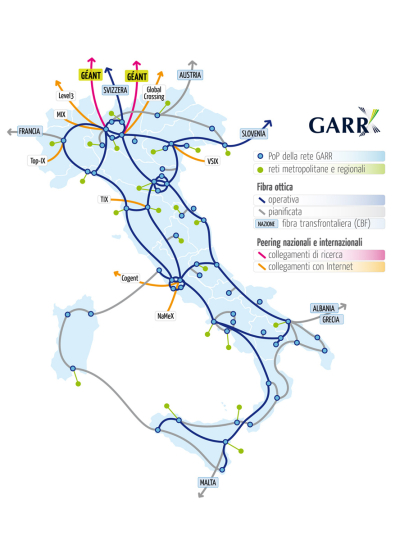
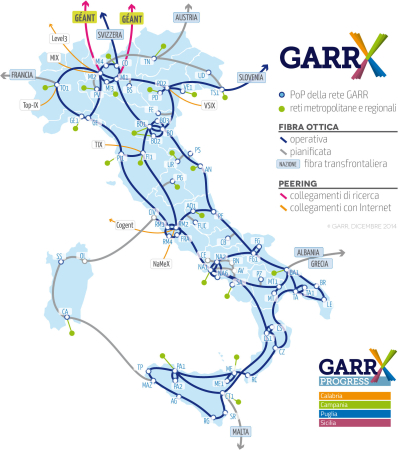
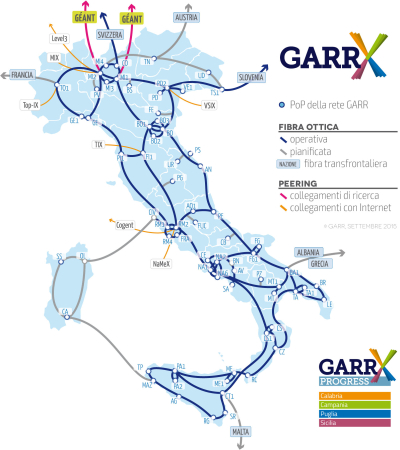
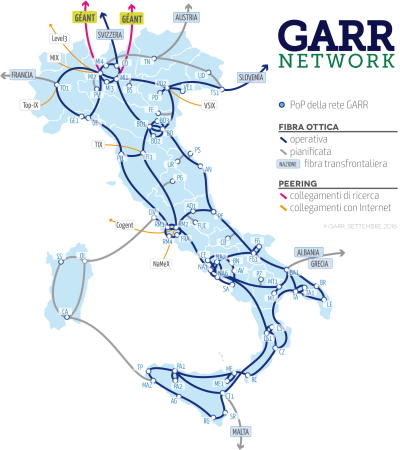
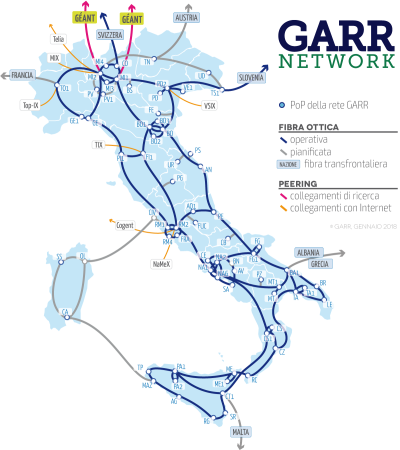
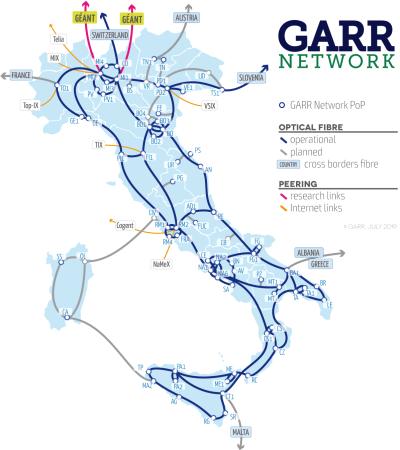
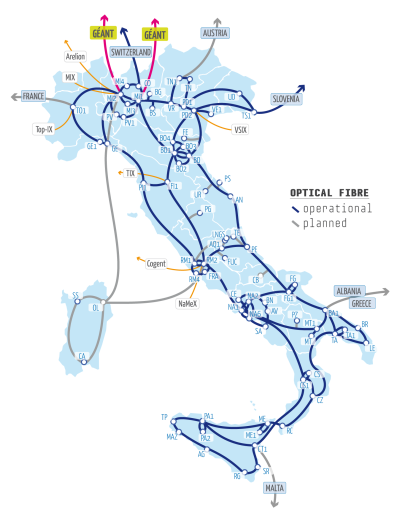
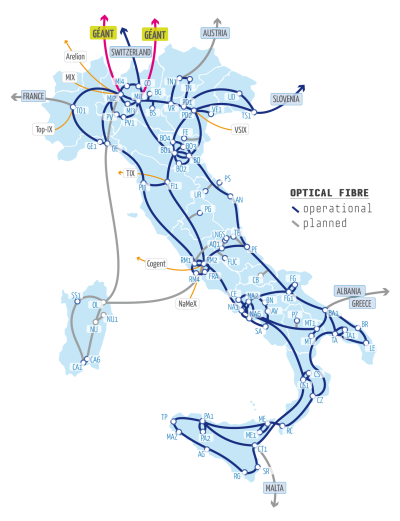
The future is here and the new network for universities and research is GARR-X. A network almost entirely made up of optic fibre that when completed, will reach speeds of up to 100 Gbps. It is the first Next Generation Network in Italy, born in January 2011 with new access links for hundreds of sites.
The brief chronological summary presented here leaves out many aspects that have marked the history of GARR network, such as technological innovation and the expansion of the portfolio of advanced services, which over the years have enriched GARR offering for the national scientific community. However, even if we only consider its evolution in terms of connection speeds, we realise how the development of the network for research has been constant, in keeping pace with technological developments and the needs of a consistently innovative community. In 20 years the bandwidth capacity has grown by more than 5.000 times and the number of sites connected has gone from the initial 7 to over 500 centres throughout the Country.
The community of connected organisations has also grown, in accordance with a concept already supported by Minister Ruberti: not just universities and research labs but also hospitals, academies, music schools, museums, libraries and other cultural institutions.
2002 – From GARR Ministerial Commission To Consortium GARR
On the management front, the group born spontaneously in 1986 changed its institutional form several times, without however losing sight of the goal and the original spirit of contributing to innovation and supporting collaboration in the academic and scientific world. Over the years, the growing popularity of the network has led to a shift from a field of predominantly technological experimentation to a true service for the scientific and academic community. The transformations in the organisational structure have therefore taken account of that change.
In December 1990, alongside the GARR Commission founded in 1988, the ministry (MURST) established a Commission for Scientific Computing to promote the development of scientific computing, increase the potential of the network infrastructure and optimise available financial resources.
These two commissions came together in April 1993 as the Commission for Networks and Scientific Computing, which in January 1994 created an advisory body for GARR network which could function as an operational point of reference for the national research network. The management of GARR network was thus transferred to the Organismo Tecnico Scientifico (OTS), with Orio Carlini nominated as its president.
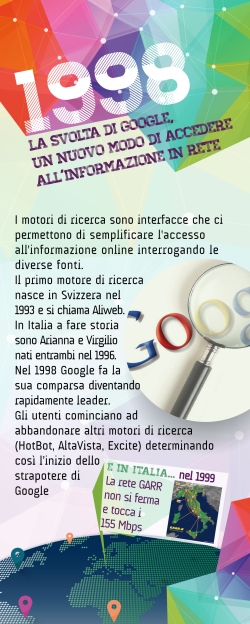
In 1998 the GARR-B network became operational; this was a true quantum leap for its increased coverage throughout the territory. The new network, thanks in part to special funds for certain areas of southern Italy, was able to bring network infrastructures to those areas of Italy where they were most lacking. The leadership of the project was assigned to INFN, that had previously signed a Framework Agreement with the Ministry of University and Research. The leadership was however temporary because the project had already planned the creation of a Consortium between research institutions and universities, which in the future would be tasked with planning and guiding network developments.
The path that led to the birth of Consortium GARR was not easy, but on November 13, 2002 the charter was finally signed. The signatories, under the patronage of the Ministry of Education, University and Research, were the representatives of the founding bodies: CNR, ENEA, INFN and the CRUI Foundation representing all Italian universities. The first President of Consortium GARR was Angelo Scribano.





 www: cronache di rete dal 1991 ad oggi
 Il dito della tecnologia e la luna della scienza
 Le reti della ricerca europee verso il 2020 e oltre
 Internet nel 1986
 Tanti ricordi, una ricetta: nella crisi innovare senza paura
 Corsi e ricorsi di Internet
 La tecnologia (come la natura) procede per salti
 Internet è di Tutti
 20 anni di reti della ricerca: cosa cambia e cosa resta
 Internet è partecipazione
 Watch more on GARR.tv