GARR

Governing bodies

23 September 2015 | GARR


  • The General Assembly


    The Assembly is composed of all the promoting and ordinary members and the representative of the members belonging to the "other entities" category.

    • CNR - Consiglio Nazionale delle Ricerche
    • ENEA - Agenzia nazionale per le nuove tecnologie, l'energia e lo sviluppo economico sostenibile
    • Fondazione CRUI
    • INAF - Istituto Nazionale di Astrofisica
    • INFN - Istituto Nazionale di Fisica Nucleare
    • INGV - Istituto Nazionale di Geofisica e Vulcanologia (Rappresentante soci Aderenti categoria "generale")
  • The Board of Directors


    The Consortium is administered by a Board of Directors composed of 7 members appointed by the Assembly as nominated by the members at a rate of 3 (three) for the CRUI Foundation, 1 (one) for the National Research Council, 1 (one) for ENEA, 1 (one) for the INFN and 1 (one) appointed by MUR.

    The Board of Directors remains in office for three accounting years and expires on the date of the general Assembly meeting called to approve the balance sheet for the last year of its office

    Members of the Board of Directors

    Mandate from 27/04/2022 to 30/04/2025

    Mandato dal 30/05/2025 al 30/04/2028

    • Maurizio TIRA - Fondazione CRUI - Presidente
    • Massimo BERNASCHI - CNR - Vice Presidente
    • Gerardo CANFORA – Fondazione CRUI
    • Marco CIUCHINI - INFN
    • Marco DELL'ISOLA – Fondazione CRUI
    • Giovanni PONTI - ENEA
    • Francesco Antonio PONTICELLI – Ministero dell’Università e della Ricerca
    • Former components of Board of Directors
    • GARR Board of Directors website
  • The President


    The President is appointed by the Board of Directors among its members and has the legal representation of the Consortium.
    The President is in office for three years and can be re-elected only once.

    • Maurizio Tira - FONDAZIONE CRUI, GARR President
    • GARR Presidents

    For contacts or institutional communications:

    • presidenza @ garr.it
    • presidente @ garr.it
  • The Director


    The Director is appointed by the Board of Directors and has operational and managerial responsibility for the Consortium.

    • Claudia Battista
    • GARR Directors

    For contacts or institutional communications:

    • direzione @ garr.it
    • direttore @ garr.it
  • The Board of Financial Auditors


    The Board of Financial Auditors is composed of three standing Auditors, one of whom acts as President, and two as alternates. The Board of Financial Auditors remain in office for three years and are appointed by the Assembly who also appoint the President thereof.
    The Board of Financial Auditors supervise the administration of the Consortium, monitor the observance of the laws and of the Statute and verify the regular keeping of the accounts and the correspondence of the financial statements with the results of the accounting books and records.

    Members of the Board of Financial Auditors

    mandate from 27/04/2021 to 26/04/2024

    Standing Auditors
    • Adele CALDARELLI - President
    • Giada FASSONE
    • Vito PADRONI
    Alternate Auditors
    • Marco AVAGLIANO
    • Salvatore DE BELLIS
    • Former members of the Board of Statutory Auditors
  • The Technical and Scientific Committee


    The Technical and Scientific Committee consists of no less than nine members; it shall remain in office for three years and is appointed by the Board of Directors, which determines the number of its components and appoint its President.

    The Technical and Scientific Committee is an advisory body to the Board of Directors for the technical and scientific areas of the Consortium's activities; it formulates operational proposals regarding the implementation of the association's goals and it contributes to the identification and elaboration of annual programmes of activity.

    Members of the Technical and Scientific Committee

    mandate from 01/07/2024 to 30/06/2027

    • Angelo SCRIBANO - Consortium GARR - Presidente
    • Tommaso BOCCALI - INFN - Sezione di Pisa
    • Alessandro BRUNENGO - INFN - Sezione di Genova
    • Giacinto CARETTO - ENEA -TERIN-ICT-RETE
    • Massimo CELINO - ENEA C.R. Casaccia
    • Claudio CICCONETTI - CNR - IIT - Pisa
    • Rocco DE NICOLA - IMT - Lucca
    • Ivan DUCA - CNR - DG - Unità Piattaforme digitali per la PA - Rende (CS)
    • Claudio GRANDI - INFN Sezione di Bologna
    • Marco LANDONI - INAF - OA Brera - Merate
    • Laura LEONE - Università Sapienza di Roma
    • Fernando LIELLO - Consortium GARR
    • Marcello MAGGIORA - Compagnia di San Paolo Sistema Torino
    • Gianluca MAZZINI - Università di Ferrara e Lepida
    • Ermann RIPEPI - CNR - IMAA - Tito Scalo (PZ)
    • Enzo VALENTE - Consortium GARR
    • Enrico VENUTO - Politecnico di Torino
    • Stefano ZANI - INFN - CNAF - Bologna

    • Former members of Technical-Scientific Committee
  • Consortium GARR Organization Chart


    pdf Download the Organization Chart (PDF)(64 KB)


    Organization Chart

    pdf Download the Organization Chart (PDF)(64 KB)

FAQs

14 September 2015 | GARR

  • Who manages the GARR Network?

    The GARR Network is created and managed by the Consortium GARR, a non-profit organization founded under the aegis of the Ministry of Education, University and Research. The founding members are CNR, ENEA, INFN and Fondazione CRUI representing the Italian Universities.

  • Who can access the GARR Network?

    The GARR Network is the only national network dedicated to the education, research and culture community.
    National or international organizations for research, education, training and culture located in Italy may request the connection to the GARR Network (D.lgs n.218 - 25/11/2016 Art. 10 comma 5). The methods for requesting a connection are indicated on the page “ Network access rules”

  • Who should I contact to request or to change a connection to the network?

    To request a connection to the GARR network it is sufficient to send an email to This email address is being protected from spambots. You need JavaScript enabled to view it., indicating the aims and activities carried out by the organization, any scientific collaborations in progress and the use that is expected to be made of the GARR Network.

  • How much does it cost to access the network?

    From an economic point of view, access to the GARR network is regulated according to the configuration identified to meet the specific needs of the applicant organization. Organizations wishing to use the GARR network are required to pay for the connectivity service (proportional to the required access bandwidth capacity) which also includes a series of technical-operational support services and advanced application services. The cost related to the creation and management of the organization's internal network remains the responsibility of the user.

  • I can not access the X site, is it a network problem?

    There is no single answer; the following general indications can help a preliminary diagnosis (remember that the competence of reporting to NOC any faults is exclusively of the APM).

    • If X belongs to an institution connected to the GARR Network, before notifying the NOC, check that no trouble tickets have already been issued (sent to APM e available on NOC website) that indicate the cause of the problem and possibly check if the problem occurs only towards a single machine (in which case the fault is probably not due to GARR malfunctions), or if it is more general.
    • If X does not belong to an entity connected to the GARR Network, it is advisable to check with a traceroute if in general it is possible to exit the GARR network; on NOC website, a traceroute with a web interface is available to help in this diagnosis. If it is possible to reach destinations outside the GARR Network but not to a specific site, the problem is probably due to causes outside the GARR.
  • Are traffic statistics available?

    On the GARR website, all network statistics are available (both backbone and user access), which can be ordered by PoP and by Organization (user).
    The system is integrated with the GARR www server to provide daily graphs showing two-day traffic with values taken at five-minute time intervals.

    For general Internet traffic, research (GÉANT) and national peering, an ad hoc graph has been created representing the historical traffic of the last six years.
    The statistics are available on:

    • GINS GARR
  • Who are the reference persons for the management of personal data?

    Holder of the treatment of personal data:
    Il Consortium GARR nella persona del suo Presidente
    phone: +39 4962 2000
    mail contact: privacy @ garr.it

    Person in charge of processing personal data (internal):
    Direttrice Claudia Battista
    phone: +39 4962 2000
    mail contact: rtd @ garr.it

    Responsible for personal data protection:
    Dott. Davide Vaghetti
    phone: +39 050 2213158
    mail contact: dpo @ garr.it

National Digital infrastructure

14 September 2015 | GARR

The GARR network interconnects at ultra-high capacity universities, research centres, libraries, museums, schools and other education, science, culture and innovation facilities.

The fibre optic infrastructure is based on leading-edge telecommunication technologies and covers more than 24.000 km of backbone and access links.

Here's the English translation: Today the overall backbone capacity is in the order of thousands of Gbps, while a single access link can reach 200 Gbps. Thanks to the great scalability of the technologies used, the capacities of links and backbone routes can easily evolve together with users' needs.

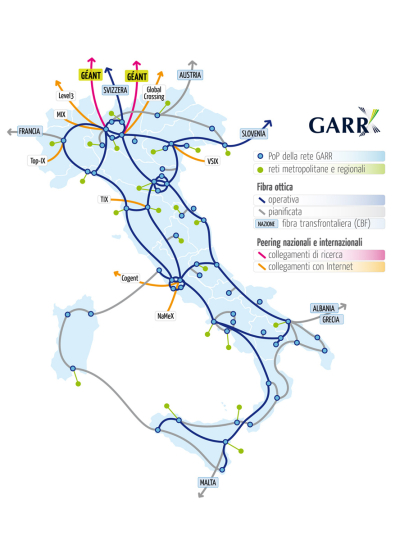
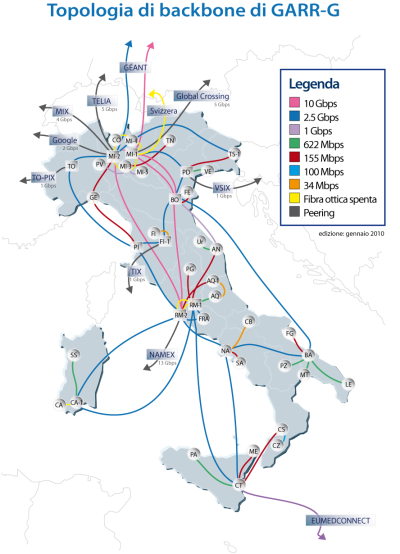
Network Map

 GARR Network

Last update: July 2024

Quality

The network’s features entail very low transmission delays, thus it is ideally suited not only for transferring very large amounts of data, but also for real-time data transmissions and HD audio-visual communication.

High capacity and coverage

With more than 100 Points of Presence distributed throughout the national territory, the GARR network provides symmetric, high-capacity connectivity and advanced services to more than 1.000 user sites including universities, music conservatories and art academies, research centres, laboratories, observatories, museums, libraries, schools and more.

Scalability

As the infrastructure is almost entirely based on fibre optics and managed in-house by GARR, it is possible to swiftly respond to the user community’s latest requirements by upgrading links and adding new ones without interfering with the network’s global performance.

Close GARR Network

GARR Network

GARR Network map. Last update: May 2024

Close

Title II

11 September 2015 | GARR

STATUTE
CONSORTIUM GARR ASSOCIATION
(GESTIONE AMPLIAMENTO RETE RICERCA)


TITLE II

(MEMBERS)

Art. 10 – Types of members

  1. The members are classified as:
    1. founding members s: CNR, ENEA, INFN, CRUI Foundation as representative of all the member state universities affiliated to GARR;
    2. ordinary members: Public Bodies or other stakeholders of interest to GARR, who join the Association in the manner described in the following Art 11 sharing its purpose and objectives
    3. affiliated members - "State Universities" category: all State Universities, represented collectively by the founding member CRUI Foundation.
    4. affiliated members “IRCCS e IZS” category: public or private institions recognised or confirmed as Istituti di Ricovero e Cura a Carattere Scientifico (IRCCS, reference research and healthcare institutions) or established as Istituti Zooprofilattici Sperimentali (IZS, experimental animal health & welfare institutes), receiving public funding from the Ministry of Health for their research activity. Their affiliation is arranged by resolution of the GARR Board of Directors upon request by the single IRCCS or IZS Institute, after having acquired a conformity notice from the Ministry of Health; it is the responsibility of the Director to inform the Assembly of members. All the affiliated members belonging to the "IRCCS and IZS" category have the right to a single vote in the Assembly, to be expressed through a representative, appointed by the Ministry of Health.
    5. affiliated members - "general" category: entities or institutions, mainly public or, in any case, recipients of public funding, carrying out research, education, training and cultural activities, interested in the purposes of GARR, which, by submitting specific written request addressed to the Board of Directors, intend to join the Association without, however, acquiring the status of ordinary. Their affiliation is arranged by resolution of the GARR Board of Directors and it is the responsibility of the Director to inform the Assembly of members.

    All the affiliated members belonging to the "general" category have the right to a single vote in the Assembly, to be expressed through a representative, democratically chosen, appointed by a meeting of the member belonging to the "general" category immediately after the approval of the final balance sheet and who he remains in office until the approval of the subsequent final balance sheet. It is the responsibility of the Director of GARR to keep up-to-date the list of the members belonging to the category "general" and to call such meeting.
    Affiliated members do not have the right to vote as an individual.

Art. 11 – New ordinary members

  1. Organisations wishing to join as an ordinary member of GARR must send a written request addressed to the Chairman.
  2. The application for admission is approved by the members Assembly with the unanimity of the founding members upon the resolution of the Board of Directors, who determines the amount of the participation in the capital base for the new member.
  3. The decision to admit the new ordinary member become effective only after the new Member has paid the fee and fulfilled any further agreed obligations.

Art. 12 – Exclusion of a member

  1. The measure of exclusion is resolved by the Assembly, as proposed by the Board of Directors, of a founding or ordinary member, and by the Board of Directors towards the member, who:
    1. has been guilty of grave breaches of statutory obligations, internal regulations and, more generally, of the resolutions adopted by the governing bodies;
    2. acts that are seriously prejudicial for/damaging GARR
    3. is responsible of serious and prolonged breaches in relation to the payment of contributions pursuant to art. 14.
    4. for affiliated members belonging in the “IRCCS e IZS” category, in the case the subjective legal qualification as Istituto di Ricovero e Cura a Carattere Scientifico (IRCCS) or di Istituto Zooprofilattico Sperimentale (IZS) is revoked.
  2. The member is not entitled to vote in the deliberation concerning its own exclusion.
  3. The measure of exclusion shall be communicated in writing to the entity concerned and effective from the day following the communication.
  4. The excluded member is not entitled to a refund of the membership fee, contributions, transfers or any results obtained by GARR, except where authorised by of the Board of Directors.
  5. The excluded member must still fulfil the obligations agreed during its membership in the Association.

Art. 13 - Withdrawal of a member

  1. Members may withdraw from GARR for justified reasons by communicating such decision at least 3 months before the end of the financial year.
  2. The member who withdraws must still fulfil its obligations as a member of the association.
  3. The withdrawing member is not entitled to a refund of the membership fee and contributions, nor to pay or return any other contribution in money, goods or services performed in the course of the membership, and cannot take advantage of some of the results obtained by GARR except where authorised by the Board of Directors.

Art. 14 – Members' obligations

  1. Participation in GARR entails compliance with the provisions of the Articles of Association, of this Statute, of the internal regulations and resolutions adopted by the corporate bodies and, for the new ordinary members , the payment of the shareholding in the equity fund approved pursuant to art. 11, paragraph 2.
  2. All the members are also required to pay the annual membership fee within the relevant year, as determined by the Board of Directors and indicated in the Budget approved by the Assembly, based on the characteristics and type of the entity. The annual membership fee is paid by the members belonging to the "State Universities" category also on behalf of the CRUI Foundation, using the specific funding allocated by MUR (Ministry of University and Research) in the universities ordinary funding decree for the support and management of the GARR network.
    The annual membership fee for the associated members belonging in the "IRCCS e IZS" category is paid by the Ministry of Health è versato dal Ministero della Salute, from its ordinary research funds.
    The founding and ordinary members are also obliged to pay pro rata supplementary contributions, deliberated annually by the Assembly, in the face of the necessity of providing social expenses not compensated with the proceeds of the association.
  3. Each member, in complying with its own procedures and based on its own specific agreements, is committed to providing GARR with the technical knowledge, professional skills and infrastructure resources and personnel required for the best achievement of the social objectives.

Art. 15 – Members' Rights

  1. The members exercise their rights as recognized by the present Statute, the Internal Regulations and the deliberations made by the Social Bodies.
  2. The Board of Directors regulates the rights of members to use the results of scientific research carried out by GARR, taking into account the actual participation in the research of the individual members and without prejudice to any rights of the State or third parties.

Art. 16 – Liability to third parties

  1. GARR acts exclusively in its own name; GARR cannot represent the individual members in their dealings with third parties or assume obligations on their behalf; and vice versa, no members can represent GARR in its dealings with third parties or assume obligations on its behalf.
  2. For obligations taken on behalf of GARR by those who represent it in accordance with the Statute, third parties may claim their rights exclusively on the capital base.

History of GARR Network

11 September 2015 | GARR
  • Introduction
  • History
  • The idea
  • Making it happen
  • The evolution
  • Timeline
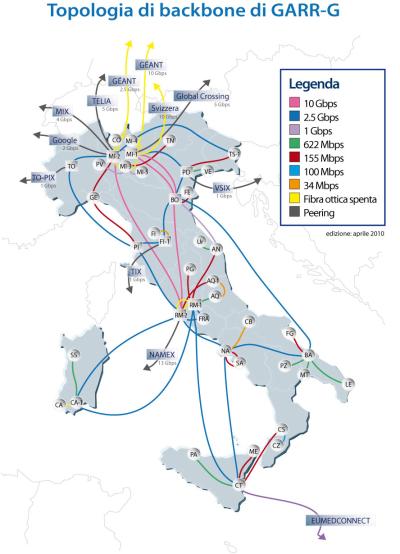
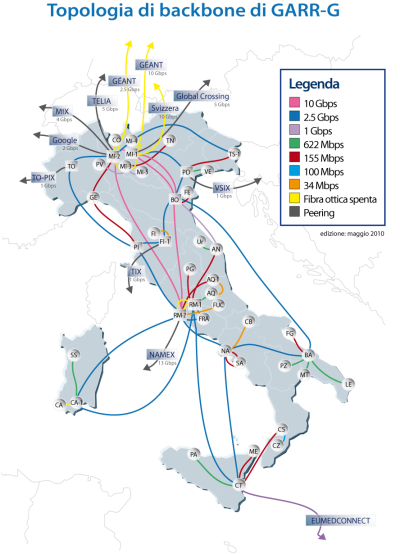
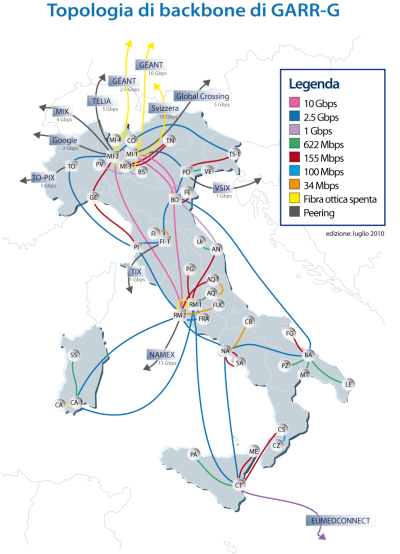
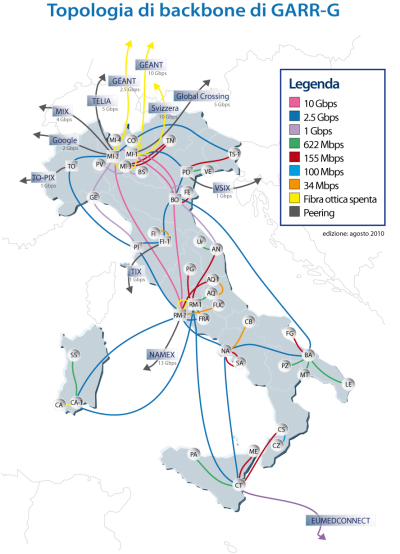
  • Maps
  • Articles
  • Video
  • Events
  • Introduction

    It is impossible to imagine today's society without the Internet. We could hardly conceive a way of communicating or collaborating remotely without having access to information on the net or without those tools that we take for granted, such as e-mail or the web.


    But how was Internet born and how did it gain this enormous success?

    A key player in this story was the world of higher education and research, a domain which has always significantly contributed to the progress and innovation of society.

    In Italy too, the first digital network deployed throughout the Country was the one serving universities and research centres. GARR network, in operation since 1991, owes its name to the "Gruppo per l'Armonizzazione delle Reti della Ricerca" (group for the harmonisation of research networks), and its creation marked a significant milestone. Before that time, there were many experiments and many different networks connecting individual research institutes, each moving in a different direction, developing technological solutions that didn't speak to each other, with the inevitable result of a great waste of energy and economic resources.

    The initiative of the then Minister of Scientific and Technological Research was to gather the main players of the Italian digital network services, to integrate the different infrastructures thus creating a single national network: GARR. An infrastructure created to connect with the rest of the world and designed to promote the internationalisation of research.

    The first link was at an ultra-high speed for those times: 2 Mbps. 20 years later, GARR boasts links at 10 Gbps and is already preparing for 100 Gbps. A non-stop growth that has contributed to the success of innumerable research projects by our academic and scientific community, both nationally and globally. In these 20 years GARR network has been a technological landmark for researchers and has been synonymous with innovation and broad scientific collaboration.

  • History

    University and research, key players in the birth of the internet

    The groundbreaking idea that led to the emergence of the Internet is the concept of a network with no central control, but rather composed of different nodes interconnected through pathways which allow data to be rerouted in case of power failure or breakdown of any component.

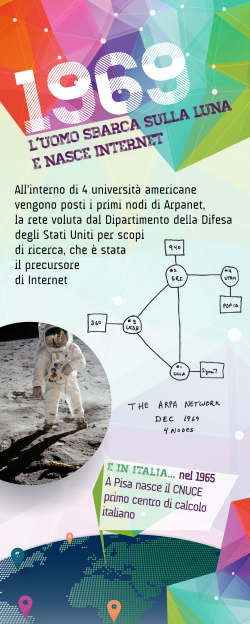
    It was the universities that hosted the first four nodes of ARPANET, the network created by the U.S. Department of Defense, which was the precursor of the Internet. It was the scientific world that defined standards and developed the most widely used services like e-mail, mailing lists, news and file transfer services.

    The TCP/IP protocol was developed in the early 70s at the University of California. Subsequently, in the United States and in Europe, various networks were established to connect universities, research institutes and computing centres, in addition to experimental versions of the first international satellite connections. A turning point for the emergence of large-scale Internet came in 1986, with the birth of the National Science Foundation Network (NSFnet), which provided the first Internet backbone, an information superhighway boasting very high speeds (56 kbps) for the scientific community and American universities.

    Meanwhile Europe saw the emergence of sophisticated network architectures whose usage would continue to grow. Thanks to its interconnection with the American networks, the Internet - the network of networks - became an unstoppable global communications tool.

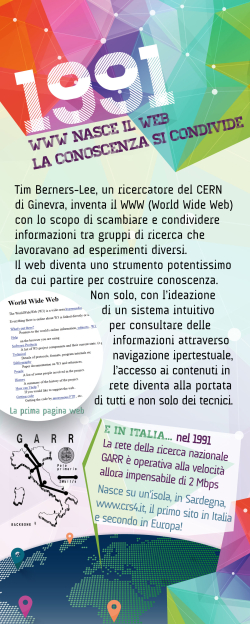
    A decisive contribution came from the European research community: in 1991, CERN researcher Tim Berners-Lee invented the World Wide Web (WWW), with the purpose of exchanging information between research groups working on different experiments. With the creation of an intuitive system for exploring information through hypertext navigation, access to content on the network became available to everyone and not just technicians.

    The first networks in Italy: a decisive contribution from the research world

    Italy has always played a leading role at the international level in the field of computer networks. Originally, as in other countries, the situation was rather fragmented, and already by the end of the 70s there were different networks developed in the research sector. CNR network, RPCnet, became operational in 1978; INFNet, the network for nuclear physics was born in 1979; and in 1984 a project was presented for the National University Network (RNU) that would link all universities belonging to the various Computing Consortia (CILEA, CINECA, CSATA). Each network spoke a different language due to the use of different protocols, which made any kind of collaboration very difficult.

    The first intercontinental connections between different networks were made thanks to satellite communications, and date back to 1977 with the United Kingdom and Norway. Italy was the third European country to connect in 1986 a network node to Arpanet thanks to the National Center for Electronic Computing (CNUCE), a CNR institute based in Pisa that was able to establish a connection via an agreement signed with Italcable and Telespazio.

    A pan-European network began to emerge in 1984; the European Academic and Research Network (EARN) was the continental version of the US inter-university network BITNET, which promoted the use of the network in the university and research field and stimulated the establishment of a homogeneous community of users. Italy was the first country to have a link with BITNET.

    The experience of the first networks linking different organisations soon demonstrated that individual networks were not a viable option, being too expensive and insufficient to ensure the interdisciplinary exchange needed for research. It was therefore necessary to share resources and to unify experiments.

  • The idea

    Time for a single network

    Faced with the increasing use of digital networks for information exchange, researchers soon realised how the existence of increasingly fast, reliable, and, above all, interoperable channels would become a very important requirement for their work.

    Similarly, from an economic standpoint it was understood that multiplying resources and energies for different networks for each field of application or private interest was not the right path to follow.

    In this context, the European Commission began to define longer-term objectives and launched the EUREKA program to support innovation, research and development projects in all technology sectors. Within this program, the COSINE (Cooperation for Open Systems Interconnection in Europe) project was launched with the aim of encouraging cooperation among researchers in Europe and promoting the development of open networks and the use of a non-proprietary protocol such as OSI.

    COSINE (1985-1993), in particular, aimed at creating a single network within the European landscape, and to do this it was necessary for each country to initiate a process of harmonisation of existing networks at the national level.

    Thanks to this European push, the then Minister of Scientific Research, Granelli, and his successor Antonio Ruberti, together with the delegate for the EUREKA projects, Orio Carlini, began to lay the foundations for the Italian participation in the European common network by summoning the key players of the national computer networks, who began to work to interact with each other. Thus, in 1986, at one of the preliminary meetings, the word GARR (meaning Group for the Harmonisation of Research Networks), was first used. A formal request was made to Minister Ruberti for the establishment of this working group by the 6 founding bodies: CNR, INFN, ENEA, CILEA, CINECA, Tecnopolis CSATA.

    The request was accepted and GARR, born as a spontaneous working group, was formalised as a Ministerial Commission with a Decree on March 11, 1988. The commission, chaired by Prof. Orio Carlini, worked immediately on the project of a national network infrastructure to be put in place with the funds for infrastructure investments that the National Budget Law of that year had assigned to the Minister of Scientific Research (a total of 50 billion lire were earmarked for computing and network projects).

    In addition to creating a single network, GARR also pledged to expand and integrate network services, streamline costs and harmonise development policies. Meanwhile, at the international level, GARR was carrying out the important work of coordinating the European networks and promoting scientific collaboration.

    The new unified network saw the beginning of a season of great technological innovation in the networking sector, the result of a constant commitment and a great spirit of collaboration among the various players in the field.

  • Making it happen

    From the project to the first backbone (1989-1991)

    The project for the creation of the national research network was presented to the Ministry in 1989; once approved, it received a grant of 5 billion lire from the chapter on research infrastructure of the 1988 National Budget Law. The total cost of the project was more than 8 billion, and the remaining 3 were invested by the six member organisations, who signed an agreement on March 2 1989, providing for a three-year term and the establishment of a Network Management Committee chaired by Antonio Cantore, director of CILEA.

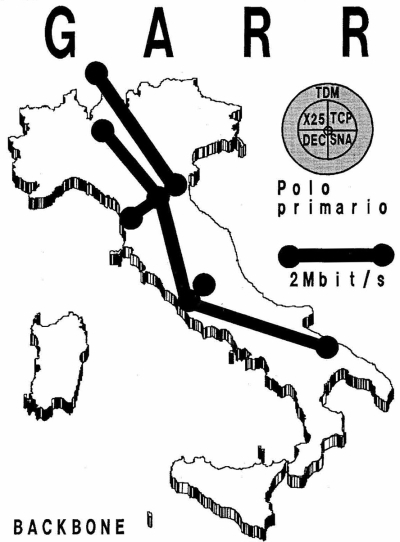
    The first phase of the project called for the establishment of the network backbone that interconnected 7 main nodes: Milan (CILEA), Bologna (CINECA and the ENEA and INFN-CNAF pole), Pisa (CNR-CNUCE), Rome (INFN), Frascati ENEA and INFN) and Bari (CSATA). The speed of the connections between these sites was very high for the time at 2 Mbps. Subsequently, hundreds of other research institutes and universities were linked with variable speeds from 64 kbps to 2 Mbps. The network also had links with international research networks and with CERN in Geneva.

    The project was completed very fast, so that in early November 1990 the first tests were carried out and the network became fully operational in 1991.

    Nevertheless, the work was not easy because, with different protocols, each network was speaking its own language, with each research group considering their own choice was the best. The approach used by GARR network was not to impose a protocol on others but rather to allow them to co-exist. It was the natural evolution of the network to determine the success of the TCP/IP protocol that is still in use today.

    The network was recognised internationally as one of the most advanced in terms of design and performance and was created to adapt easily to future developments.

    Up to 5000 times faster (1992-2011)

    From the beginning, there were specific working groups within GARR for the various network aspects: one for the network infrastructure, one for e-mail and one for each of the different network protocols. These groups included the most important experts in the field, those who a network historian such as Giorgio Giunchi called "the via Panisperna Group of the Italian Internet".

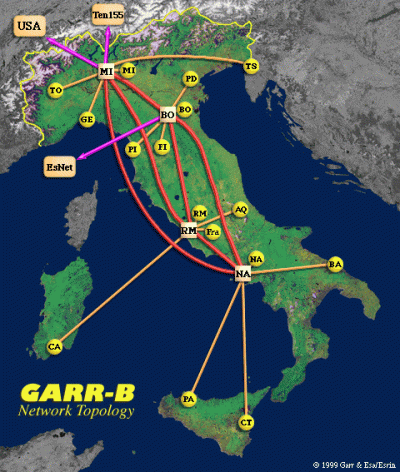
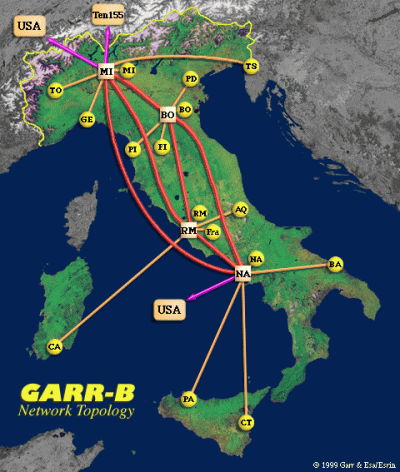
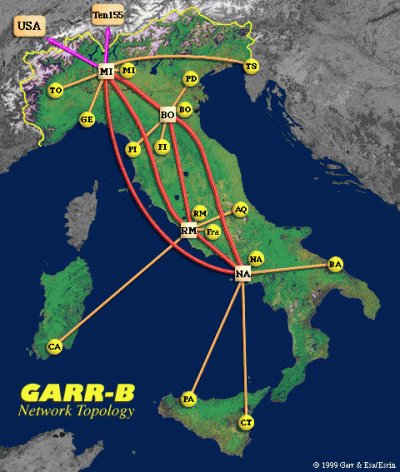
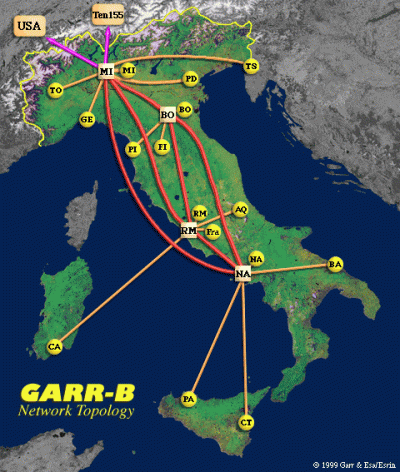
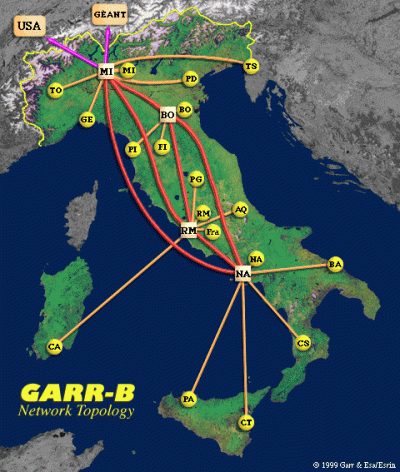
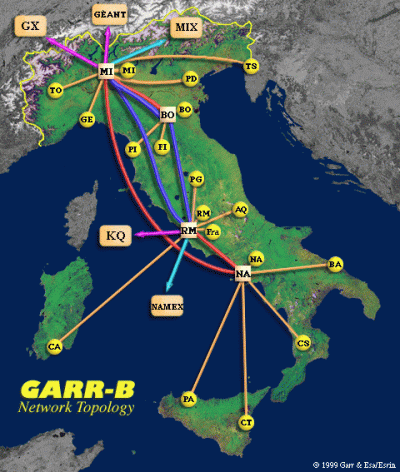
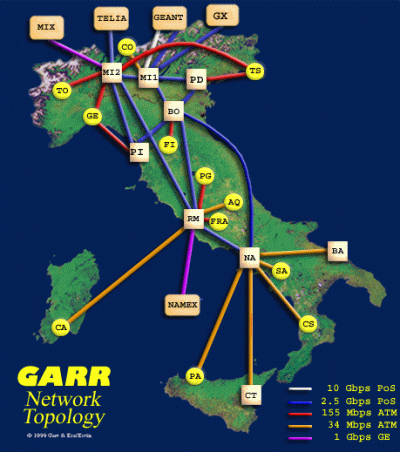
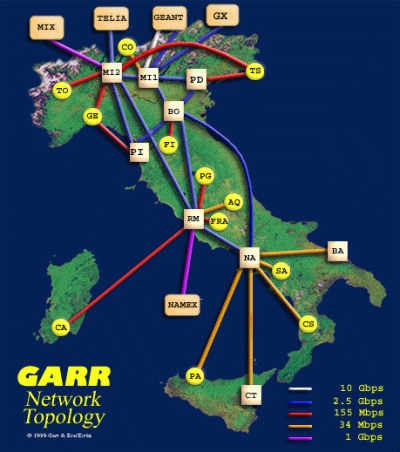
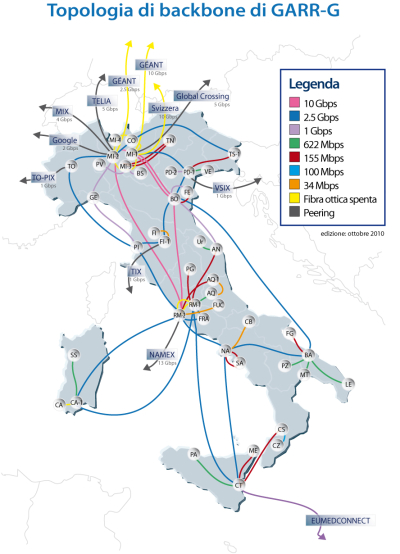
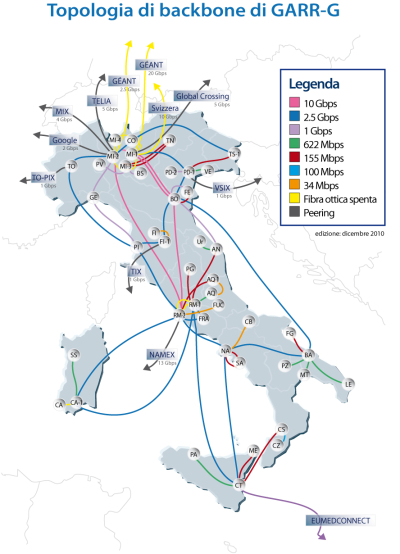
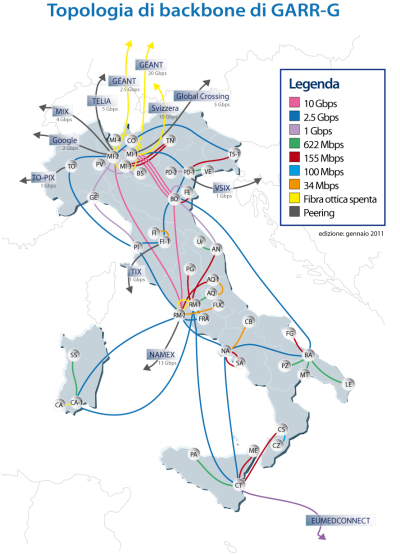
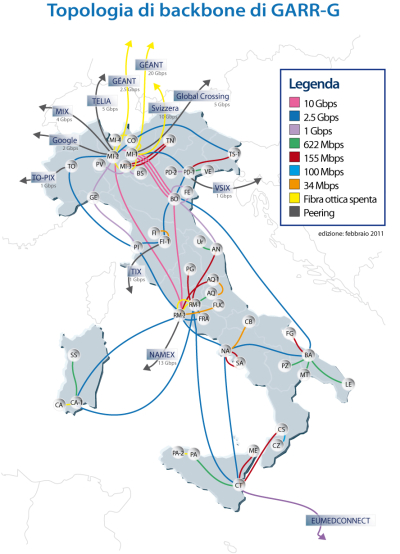
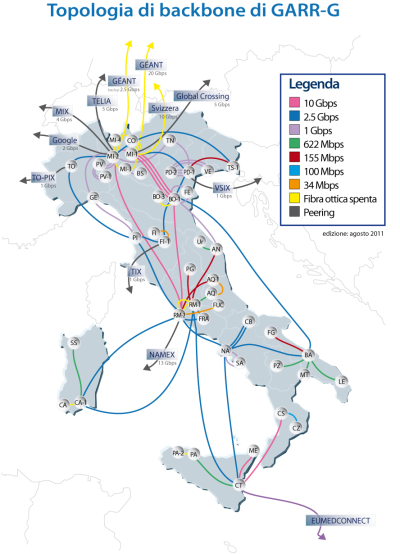
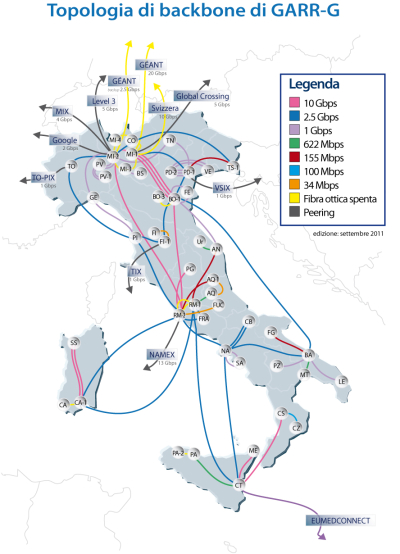
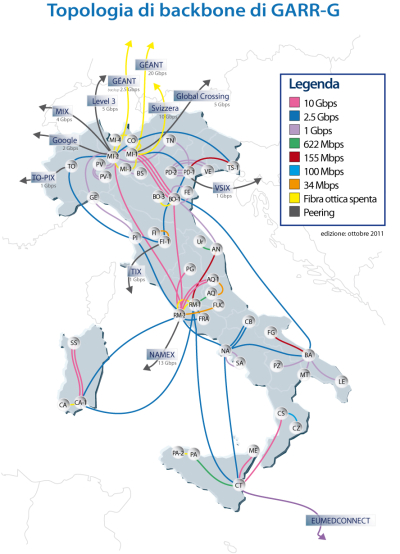
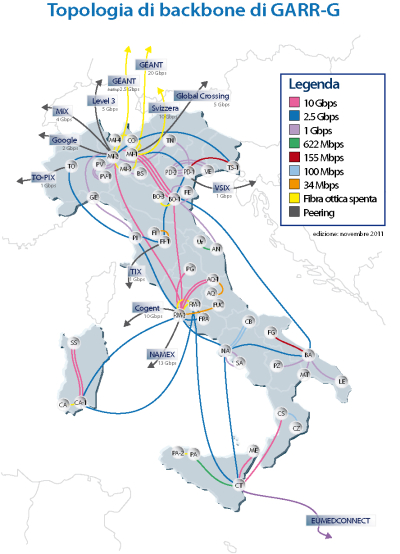
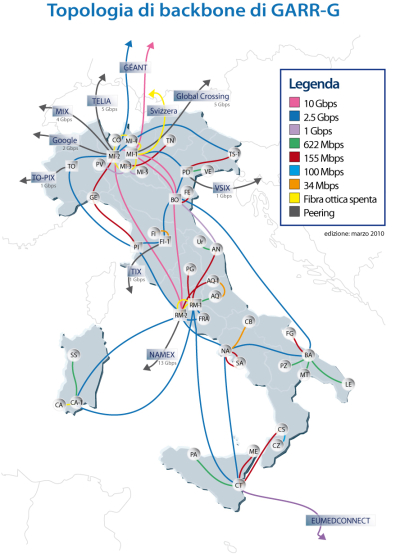
    GARR network grew rapidly, and subsequent years saw technological developments that led to ever higher speeds. GARR-2 became active in 1994, reaching speeds up to 34 Mbps by 1996, while 1998 saw the birth of GARR-B (Broadband), which once completed would reach 155 Mbps. In the 90s, the design and management of the network were a cooperative effort involving all institutions; among these, INFN-CNAF was particularly active. In more recent years, starting in 2002, the order of magnitude was the Gig. In fact the GARR-G (Giganet) network includes connections up to 10 Gbps.

    The future is here and the new network for universities and research is GARR-X. A network almost entirely made up of optic fibre that when completed, will reach speeds of up to 100 Gbps. It is the first Next Generation Network in Italy, born in January 2011 with new access links for hundreds of sites.

    The brief chronological summary presented here leaves out many aspects that have marked the history of GARR network, such as technological innovation and the expansion of the portfolio of advanced services, which over the years have enriched GARR offering for the national scientific community. However, even if we only consider its evolution in terms of connection speeds, we realise how the development of the network for research has been constant, in keeping pace with technological developments and the needs of a consistently innovative community. In 20 years the bandwidth capacity has grown by more than 5.000 times and the number of sites connected has gone from the initial 7 to over 500 centres throughout the Country.

    The community of connected organisations has also grown, in accordance with a concept already supported by Minister Ruberti: not just universities and research labs but also hospitals, academies, music schools, museums, libraries and other cultural institutions.

    2002 – From GARR Ministerial Commission To Consortium GARR

    On the management front, the group born spontaneously in 1986 changed its institutional form several times, without however losing sight of the goal and the original spirit of contributing to innovation and supporting collaboration in the academic and scientific world. Over the years, the growing popularity of the network has led to a shift from a field of predominantly technological experimentation to a true service for the scientific and academic community. The transformations in the organisational structure have therefore taken account of that change.

    In December 1990, alongside the GARR Commission founded in 1988, the ministry (MURST) established a Commission for Scientific Computing to promote the development of scientific computing, increase the potential of the network infrastructure and optimise available financial resources.

    These two commissions came together in April 1993 as the Commission for Networks and Scientific Computing, which in January 1994 created an advisory body for GARR network which could function as an operational point of reference for the national research network. The management of GARR network was thus transferred to the Organismo Tecnico Scientifico (OTS), with Orio Carlini nominated as its president.

    In 1998 the GARR-B network became operational; this was a true quantum leap for its increased coverage throughout the territory. The new network, thanks in part to special funds for certain areas of southern Italy, was able to bring network infrastructures to those areas of Italy where they were most lacking. The leadership of the project was assigned to INFN, that had previously signed a Framework Agreement with the Ministry of University and Research. The leadership was however temporary because the project had already planned the creation of a Consortium between research institutions and universities, which in the future would be tasked with planning and guiding network developments.

    The path that led to the birth of Consortium GARR was not easy, but on November 13, 2002 the charter was finally signed. The signatories, under the patronage of the Ministry of Education, University and Research, were the representatives of the founding bodies: CNR, ENEA, INFN and the CRUI Foundation representing all Italian universities. The first President of Consortium GARR was Angelo Scribano.

  • The evolution

    The Network Everywhere

    The title of GARR first conference, organised in 2005, is emblematic in describing the status of the network and its evolution: La rete daPERtutto ("the network everywhere"), in other words extremely pervasive throughout the territory and used by many different disciplines in the most diverse applications.

    Today, Information Technology is no longer an exclusive tool of some sectors, thanks to the technological innovations that have had a strong impact on the daily lives of each of us and made digital infrastructures accessible to everyone.

    The reason for this growth is also tied to its international character, always in step with global changes and innovations in the telecommunications sector.

    GARR was born in strong synergy with other European research networks, participating as founder in the organisations that have written the history of European networking: from RARE, the Association of European research networks, to RIPE, born for sharing experiences and technical know-how of those who manage IP networks; from DANTE, the organisation that manages the Pan-European network GÉANT, to TERENA, the association of European research networks formed by the merger of RARE and EARN.

    The international research connections, together with the provision of services available regardless of users’ geographical location, are undoubtedly an added value for GARR network, determining its distinctive character compared to other network operators. Students, teachers, and researchers in Italy can benefit from ultra-high speed connections with the rest of the world and can exploit the great potential that networks offer to carry out large-scale research projects and establish partnerships with prestigious institutions and organisations.

    In the European landscape, the growth of digital technologies has been steadily increasing in terms of performance: since the launch of the COSINE project for the creation of a single network, the pan-European network infrastructure has seen numerous upgrades. Initially the IXI network (1987), then Europanet (1993), TEN-34 (1996), TEN-155 (1998) and finally the current GÉANT (the version launched in 2009 is the third after those of 2000 and 2004).

    Anticipating the increase in interdisciplinary collaborations and data flow over the coming years, GÉANT has already conducted the first tests to bring the speed of backbone connections to 100 Gbps. Thus it continues to anticipate the requests of its users.

  • Timeline

    Timeline of the Internet from its origins to now

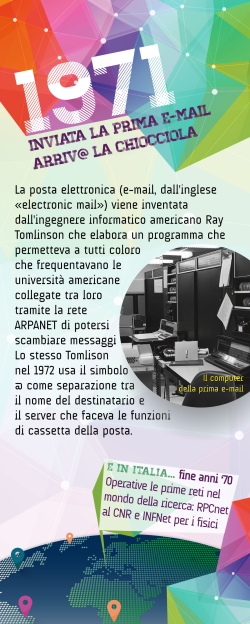
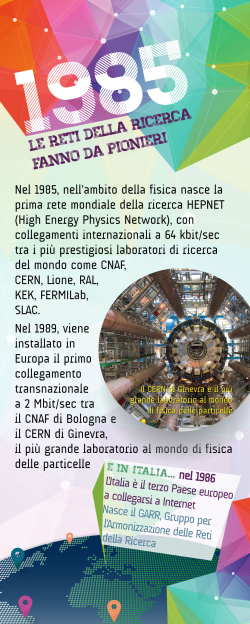
    An illustration of the most significant stages of Internet and Web history: from the birth of Arpanet in 1969, to the first e-mail, to Tim Berners-Lee's invention at CERN in 1991, up to the birth of social networks and the latest technological innovations.

    A story that has seen GARR research network as a key player who has often been able to anticipate the needs of its own user community.

    Click here to download all images in one file (zip, 6,9 MB).


    • 1969 - Inviata la prima email, @rriva la chiocciola

      1969 - Inviata la prima email, @rriva la chiocciola

    • 1971 - Inviata la prima email, @rriva la chiocciola

      1971 - Inviata la prima email, @rriva la chiocciola

    • 1980 - Pensa come un hacker

      1980 - Pensa come un hacker

    • 1985 - Le reti della ricerca fanno da pionieri

      1985 - Le reti della ricerca fanno da pionieri

    • 1991 - Nasce il WEB la conoscenza si condivide

      1991 - Nasce il WEB la conoscenza si condivide

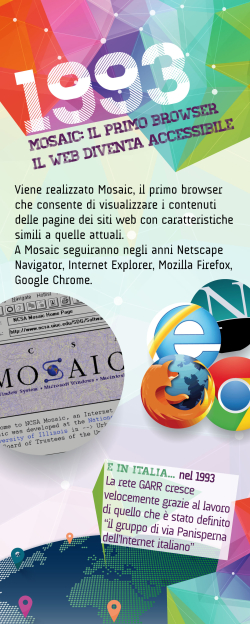
    • 1993 - Mosaic il primo browser, il web diventa accessibile

      1993 - Mosaic il primo browser, il web diventa accessibile

    • 1994 - SPAM: eccesso di informazione e comunicazione indesiderata

      1994 - SPAM: eccesso di informazione e comunicazione indesiderata

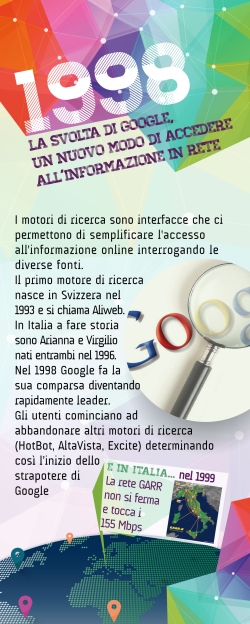
    • 1998 - La svolta di Google, un nuovo modo di accedere alla informazioni in rete

      1998 - La svolta di Google, un nuovo modo di accedere alla informazioni in rete

    • 2004 - Il boom dei Social Network, la comunicazione WEB 2.0

      2004 - Il boom dei Social Network, la comunicazione WEB 2.0

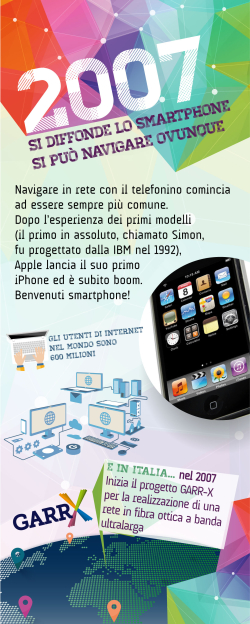
    • 2007 - Si diffonde lo smartphone, si può navigare ovunque

      2007 - Si diffonde lo smartphone, si può navigare ovunque

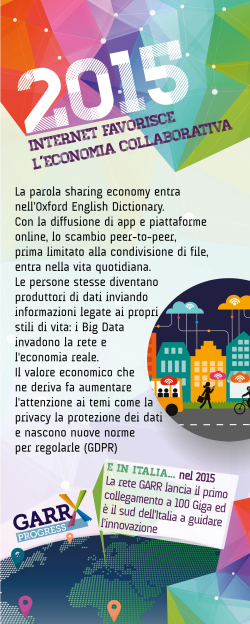
    • 2015 - Internet favorisce l'economia collaborativa

      2015 - Internet favorisce l'economia collaborativa

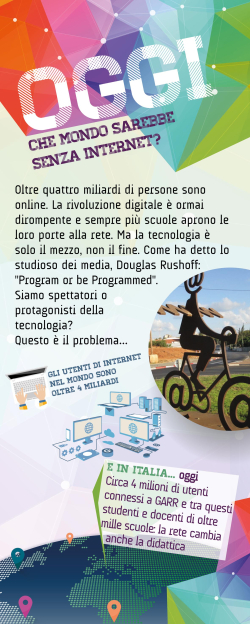
    • Oggi - Che mondo sarebbe senza Internet?

      Oggi - Che mondo sarebbe senza Internet?

    • Maps

      • 1989

        1989

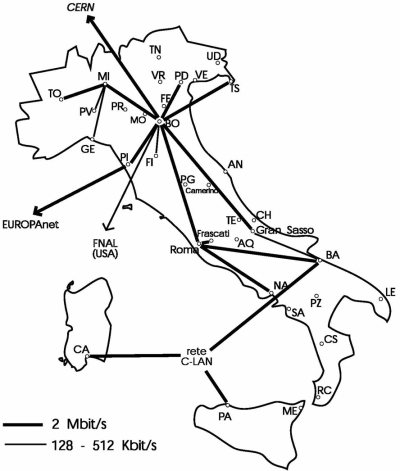
      • 1994

        1994

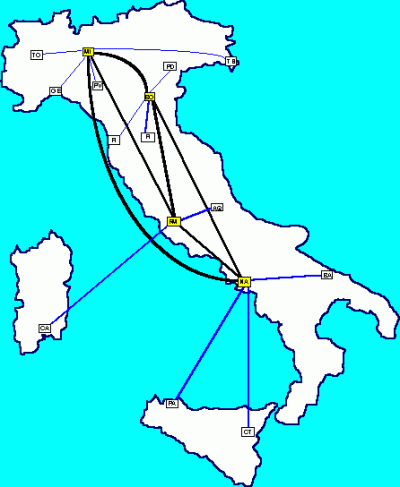
      • gennaio 1999

        gennaio 1999

      • aprile 1999

        aprile 1999

      • maggio 1999

        maggio 1999

      • aprile 2000

        aprile 2000

      • settembre 2001

        settembre 2001

      • dicembre 2001

        dicembre 2001

      • dicembre 2002

        dicembre 2002

      • maggio 2003

        maggio 2003

      • marzo 2004

        marzo 2004

      • maggio 2004

        maggio 2004

      • giugno 2004

        giugno 2004

      • dicembre 2004

        dicembre 2004

      • dicembre 2008

        dicembre 2008

      • febbraio 2009

        febbraio 2009

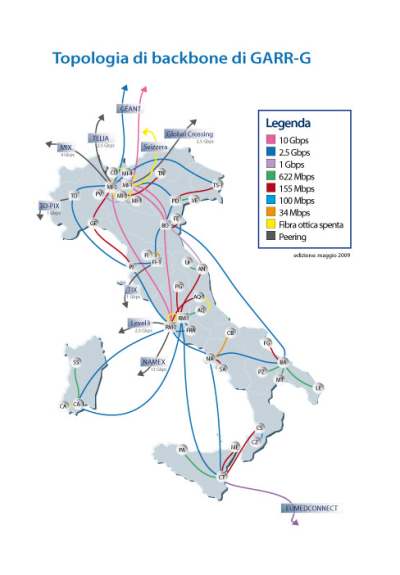
      • maggio 2009

        maggio 2009

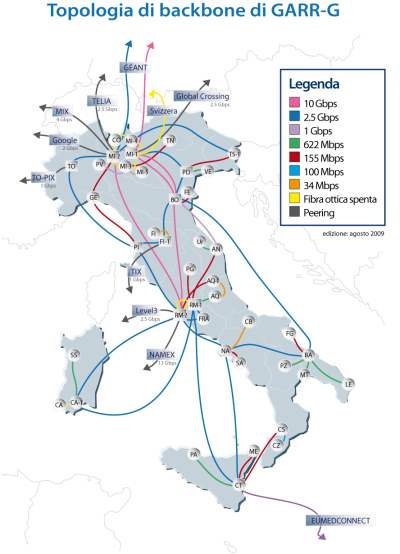
      • agosto 2009

        agosto 2009

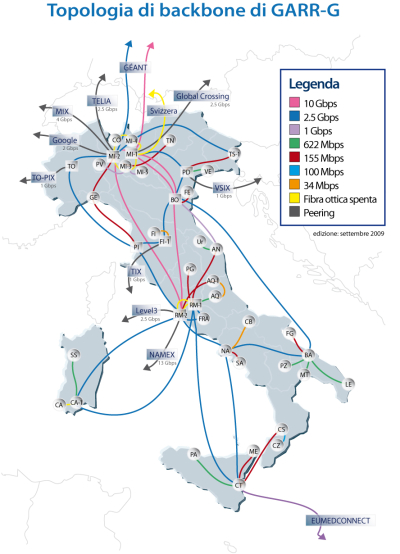
      • settembre 2009

        settembre 2009

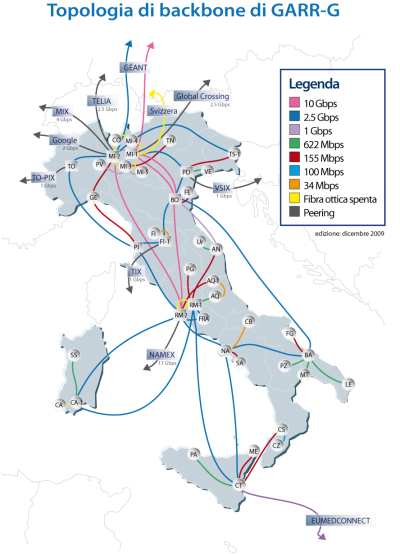
      • dicembre 2009

        dicembre 2009

      • gennaio 2010

        gennaio 2010

      • marzo 2010

        marzo 2010

      • aprile 2010

        aprile 2010

      • maggio 2010

        maggio 2010

      • luglio 2010

        luglio 2010

      • agosto 2010

        agosto 2010

      • ottobre 2010

        ottobre 2010

      • dicembre 2010

        dicembre 2010

      • gennaio 2011

        gennaio 2011

      • febbraio 2011

        febbraio 2011

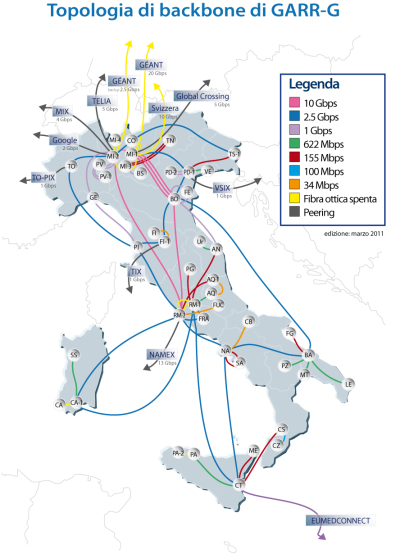
      • marzo 2011

        marzo 2011

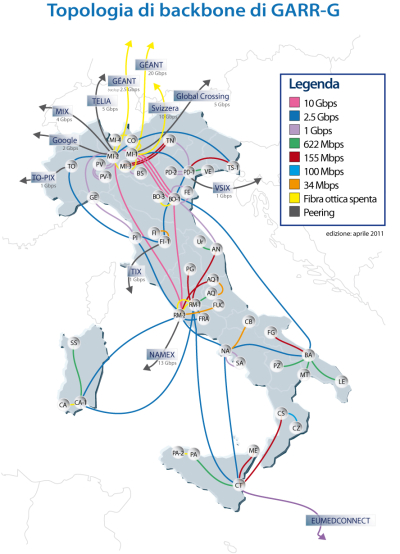
      • aprile 2011

        aprile 2011

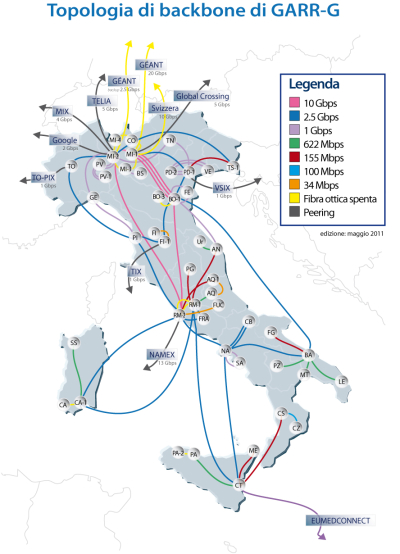
      • maggio 2011

        maggio 2011

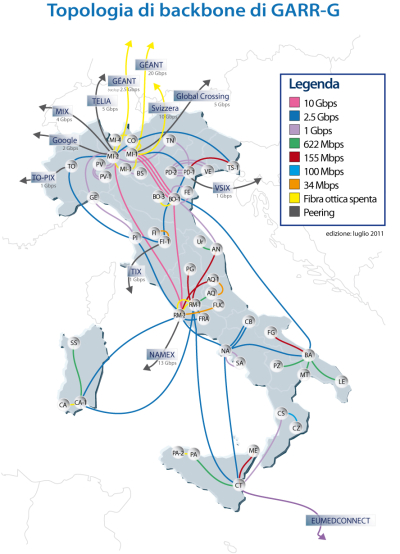
      • luglio 2011

        luglio 2011

      • agosto 2011

        agosto 2011

      • settembre 2011

        settembre 2011

      • ottobre 2011

        ottobre 2011

      • novembre 2011

        novembre 2011

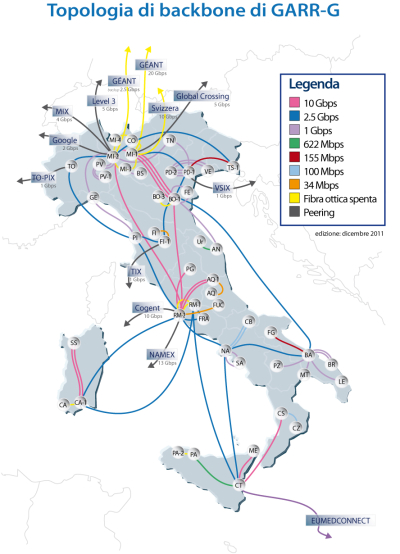
      • dicembre 2011

        dicembre 2011

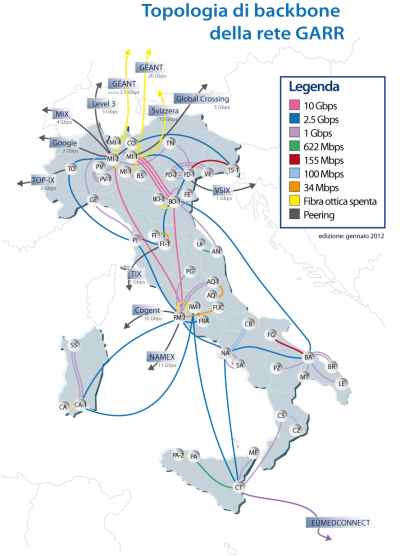
      • gennaio 2012

        gennaio 2012

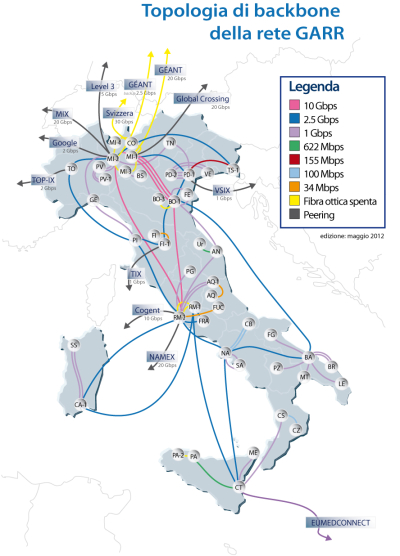
      • maggio 2012

        maggio 2012

      • novembre 2012

        novembre 2012

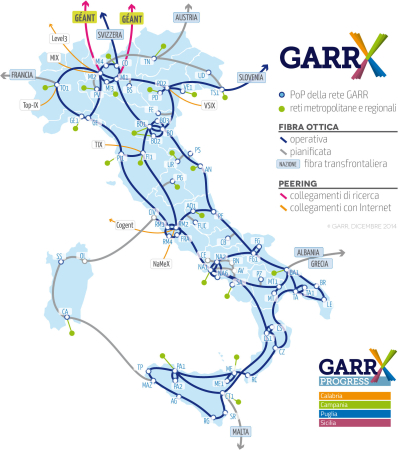
      • dicembre2014

        dicembre2014

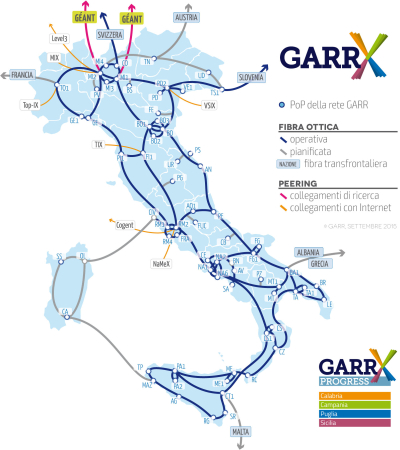
      • settembre 2015

        settembre 2015

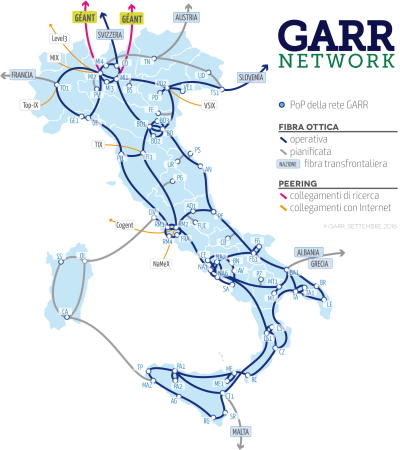
      • settembre 2016

        settembre 2016

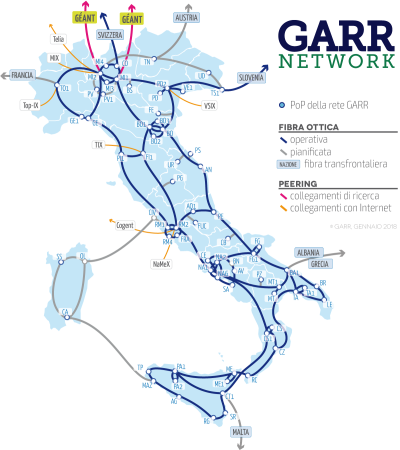
      • gennaio 2018

        gennaio 2018

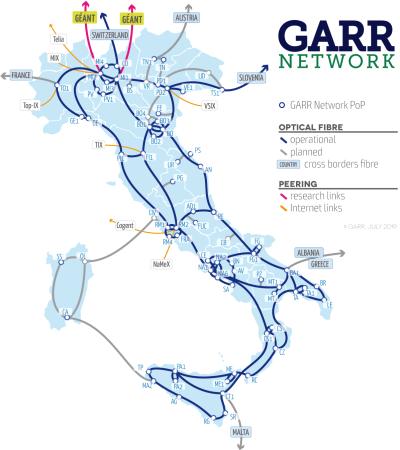
      • luglio 2019

        luglio 2019

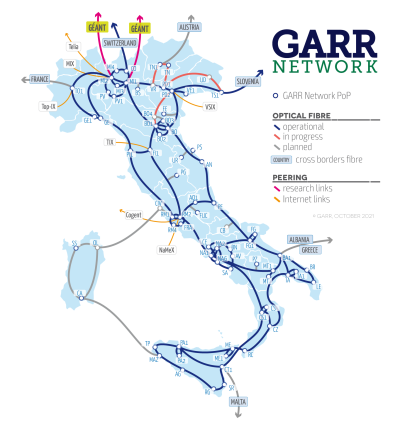
      • ottobre 2021

        ottobre 2021

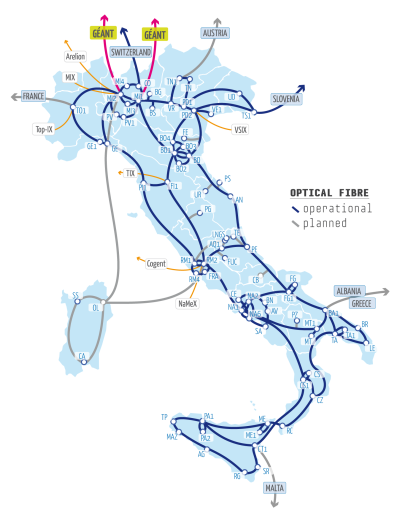
      • ottobre 2023

        ottobre 2023

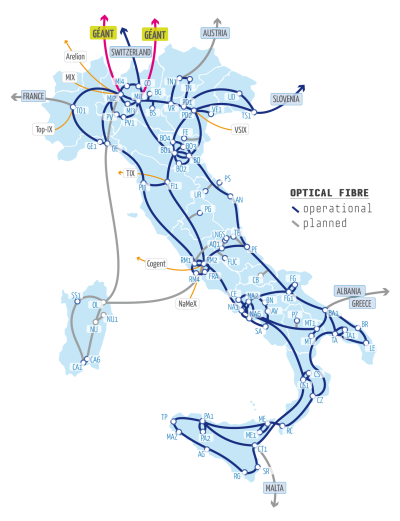
      • marzo 24

        marzo 24

      • maggio 24

        maggio 24

      Click here to download all the maps in one compressed file (zip, 11,3 MB)

    • Articles

      Fabrizio Gagliardi www: cronache di rete dal 1991 ad oggi
      by Fabrizio Gagliardi GARR NEWS 13 (December 2015)
      Renzo Davoli Il dito della tecnologia e la luna della scienza
      by Renzo Davoli GARR NEWS 12 (June 2015)
      Bob Day Le reti della ricerca europee verso il 2020 e oltre
      by Bob Day GARR NEWS 11 (December 2014)
      Marco Sommani Internet nel 1986
      by Marco Sommani GARR NEWS 10 (June 2014)
      Luciano Modica Tanti ricordi, una ricetta: nella crisi innovare senza paura
      by Luciano Modica GARR NEWS 9 (December 2013)
      Claudio Allocchio Corsi e ricorsi di Internet
      by Claudio Allocchio GARR NEWS 8 (May 2013)
      Renzo Davoli Caro GARR ti scrivo...
      by Renzo Davoli GARR NEWS 7 (November 2012)
      Joy Marino La tecnologia (come la natura) procede per salti
      by Joy Marino GARR NEWS 6 (May 2012)
      Giuseppe Attardi Internet è di Tutti
      by Giuseppe Attardi GARR NEWS 5 (December 2011)
      Antonio Cantore 20 anni di reti della ricerca: cosa cambia e cosa resta
      by Antonio Cantore GARR NEWS 4 (June 2011)
      Stefano Trumpy Internet è partecipazione
      by Stefano Trumpy GARR NEWS 3 (December 2010)
    • Video

      logo GARR.tv Watch more on GARR.tv

    • Events

      The most important GARR events

      The way we were. The Net was alredy there (2008)

      As part of the event Let's open our minds. Lazio. Land of Science, held at Università Roma Tre on May 15, 2008, GARR organised a meeting where some of the key pioneers of the Italian Internet retraced the various stages of its evolution, from the first experiments to the emergence of commercial providers, like in a storybook...
      • Event website

      Twenty year anniversary (2011)

      The 20th anniversary of GARR network was celebrated on October 24, 2011, at the headquarters of the Ministry of Education, University and Research in JF Kennedy Square. The event was an opportunity to reflect on how research networks and their users have changed the way they are doing science over the years, and to illustrate the benefits and opportunities that global interconnected research infrastructures offer to the scientific and academic community in Italy. During the ceremony, prizes were given in memory of Prof. Orio Carlini and of Prof. Antonio Ruberti, which GARR has earmarked for proposals or original work presented by young researchers on issues related to Future Internet and Next Generation Networks.

      • Event website

      Launch of GARR-X (2012)

      The new GARR-X network was presented on November 29, 2012 in Rome: 8.500 km of optic fibre for the first Next Generation Network nationwide, serving more than 2,5 million researchers, teachers and students. The new Education and Research network was officially presented by Consortium GARR at the headquarters of the Ministry of Education, University and Research, in the presence of Minister Francesco Profumo.

      • Event website

    Mission

    11 September 2015 | GARR
    • Vision
    • Three-year Activity Plan
    • Gender Equality Plan
    • Documents


    An infrastructure serving the research, education, and scientific and humanities culture community

    Vision

    GARR will increasingly be the reference point for its community, facilitating access to necessary tools and services and enabling interaction between users (applications) and infrastructure.

    With features that will make it more innovative, state-of-the-art in technology, and internationally integrated. Ensuring security, reliability, inclusivity, and widespread coverage.


    Mission

    GARR is a non-profit association representing the Italian research, education, and scientific and humanities culture community.

    It designs, implements, and manages the network infrastructure and services based on community needs, ensuring reliability, sustainability, and efficiency.


    Strategy

    To design, build, manage, maintain, and evolve an inclusive infrastructure that provides unique, high-quality tools and services to the reference community in close collaboration with it, optimizing costs, efficiency, and value.


    Values

    Community, inclusivity

    • Make community needs and values central to vision and strategy
    • Meet user requirements, anticipating needs and proposing the most effective solutions
    • Maintain active information exchange within the community, facilitating dialogue and sharing
    • Ensure openness to other similar communities

    Neutrality and transparency

    • Ensure the network treats all user traffic identically regardless of applications, content, and technology
    • Not interfere in the market, not participate in open public tenders for commercial services
    • Not filter information in any way

    Simplicity

    • Strive to offer users intuitive and quick usage

    Trust and security

    • Inspire community trust through competence, reliability, and results, explicitly addressing data confidentiality and processing
    • Ensure constant security management by protecting users from network and cyber attacks, minimizing negative effects
    • Provide training and information for prevention

    Coverage

    • Allow every community member to connect to the infrastructure regardless of location and technology

    Solidarity, sustainability, economy

    • Build the best possible network with available resources, minimizing costs and ensuring infrastructure sustainability by appropriately distributing costs across the community

    State of the art

    • Use the most advanced technologies to meet user requirements with maximum effectiveness, offering innovative usage possibilities

    International collaborations

    • Collaborate closely at European and international levels to represent GARR community needs and values and act as a liaison for specific requirements

    Actions and activities

    • A network based on owned fibers (IRU) to promote long-term stability and sustainability
    • Network evolution in terms of transmission capacity, flexibility, and routing
    • Experiment with new services above and beyond IP
    • Develop and manage Cloud and IT services to maintain control of services and knowledge
    • Actively participate in and support the European GÉANT network
    • Maintain direct contact with users through annual workshops, conferences, and dedicated events
    • Organize and conduct training events for the community on GARR expertise topics
    • Disseminate information within the community through news, events, web, etc.
    • Participate in national and European projects relevant to GARR and its reference community
    • Develop the nationally and internationally federated authentication and authorization system
    • Ensure network security and offer users increasingly better protection


    Three-year Activity Plan

    The Three-year Activity Plan outlines how GARR intends to fulfill its mission of supporting the national education and research community over the next three years through continuous evolution of the network infrastructure and highly innovative services.

    The Plan illustrates the objectives for the three-year period regarding the development of network infrastructure, federated cloud services, connectivity and international cooperation, digital identity services and cybersecurity, as well as presenting the main activities for training, communication, and personnel areas.

    Read the Three-year Activity Plan

    Read the Three-year Activity Plan


    Gender Equality Plan

    Through its Gender Equality Plan, GARR actively supports gender equality and promotes the evolution of an increasingly inclusive organization.

    The Plan represents a concrete commitment to valuing differences, particularly gender differences, and promoting an organizational culture free from prejudice, based on the fundamental values of inclusivity, equity, and transparency.

    This strategic plan defines a comprehensive framework, covering legal, organizational, economic, and social aspects, to effectively implement gender equality. Through a combination of established policies and new initiatives, the GEP aims to overcome remaining obstacles.

    Explore the activities


    Documents

    • pdf GARR Vision, Mission, and Values 2020(716 KB)
    • pdf GARR Strategy Document - 2020(800 KB)
    • pdf GARR Three-year Activity Plan 2026-2028(338 KB)
    • pdf GARR Gender Equality Plan 2023-2025(2.86 MB)


    GARR

    11 September 2015 | GARR

    GARR is the ultra-broadband network dedicated to the Italian research and education community. Its main objective is to provide high-performance connectivity and to develop innovative services for the daily activities of researchers, professors and students as well as for international collaboration.

    GARR network is designed and managed by the Consortium GARR, a non-profit association founded under the auspices of the Ministry of University and Research. The members are CNR,  ENEA,  CRUI Foundation,  INAF, INFN, INGV, Italian public universities, Scientific Research Hospitals (IRCCS) and animal health and food safety Institutes (IZS)

    OPTICAL FIBRE FOR MILLIONS OF USERS

    GARR network is an extensive digital infrastructure with about 24.000 km of optical fibre covering the entire national territory. It reaches about 3 million users and connects more than 1.000 sites, most of which are public institutions (research institutes, universities, research hospitals, cultural institutes, libraries, museums, schools).

    GARR network is interconnected with international research networks and the worldwide Internet, so regardless of the geographic location, any researcher can exchange digital data and content, use scientific computing resources and cloud-based applications.

    A CUSTOM-DESIGNED NETWORK

    To best meet the most specific requirements of the education, research and culture community, GARR is able to design custom network solutions and services.

    GARR network is unique and differs from commercial providers not only in its institutional nature, but also for its extremely high transmission capacity (up to 200 Gbps) in both download and upload. GARR governance model promotes inclusiveness and involves users in decision-making on the future evolution of the network and digital infrastructures. Unlike with commercial providers, users on GARR network aren't just consumers of data, content and services; they can also share their own resources for the benefit of the scientific community, thus becoming active contributors.

    INTERNATIONAL CONNECTIONS

    Thanks to an extensive system of interconnections with other national research networks and the interoperability of protocols and services, Italian researchers can collaborate with partners around the world. GARR, in fact, has always been an integral part of the European research network GÉANT, which it owns together with the other European NRENs. GARR is also connected to the main global research networks and international bodies that develop and govern international infrastructures, such as the IETF, the Internet Society and e-IRG.

    GARR AND THE RESEARCH NETWORKS

    The international outlook is one of the elements that distinguish the work of European NRENs (National Research and Education Networks) like GARR when compared to commercial providers.

    The NRENs are in fact International network, working together on research and development projects.

    Thus it is possible to offer common services and end-to-end connections on a global scale, a crucial aspect for research communities, which are increasingly committed to international collaborations.

    This is guaranteed by GARR's membership in GÉANT, which manages the European research backbone, and in RIPE (Réseaux IP Européens), and its participation in the work of IETF and the Internet Society - Italy Chapter, as well as an extensive network of bilateral relations with European and global research networks.

    • For further information on research networks in Europe and the world, click here

    Read the Three-year Activity Plan

    Read the Three-year Activity Plan
    torna su